
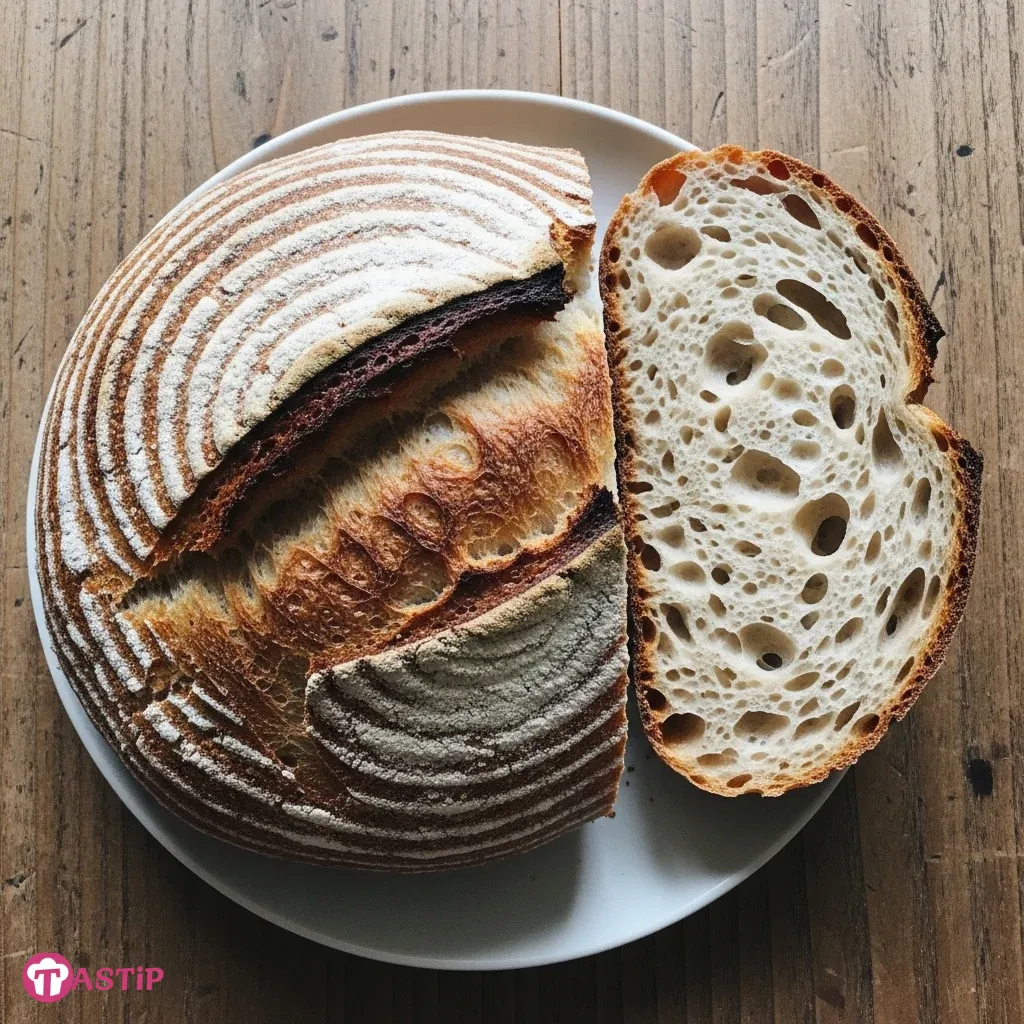
Journeying through the cobblestone streets of San Francisco or the rustic, flour-dusted bakeries of rural France, one specific aroma always captures my soul: the unmistakable tang of fresh Sourdough Bread. This isn’t just a loaf of bread; it is a living, breathing testament to ancient culinary traditions that date back thousands of years. You will experience a crackling, golden-brown crust that yields to a soft, airy, and beautifully chewy interior filled with “wild” flavor.
Every slice offers a complex profile, balancing a subtle acidity with the earthy sweetness of slow-fermented grain. Mastering Sourdough Bread at home connects you to a global lineage of artisans who rely on nothing but wild yeast, water, and immense patience. Prepare your kitchen for an aromatic transformation as we embark on this rewarding fermentation adventure together. This guide will help you craft the perfect loaf that rivals any artisanal bakery across the globe.
Why You’ll Love This Sourdough Bread Recipe
- Unmatched Depth of Flavor: The long fermentation process creates a complex, tangy profile that commercial yeast simply cannot replicate.
- Superior Gut Health: Natural fermentation breaks down gluten and phytic acid, making this Sourdough Bread easier to digest and more nutrient-dense.
- Incredible Texture: You achieve a professional-grade “open crumb” and a shatteringly crisp crust using basic kitchen tools.
- Artisanal Satisfaction: There is a profound sense of pride in creating a world-class loaf from just three humble ingredients.
Ingredients You’ll Need
In my travels, I have learned that the quality of your Sourdough Bread depends entirely on the quality of your raw materials. Always opt for unbleached, high-protein bread flour to ensure a strong gluten structure. Use filtered water to avoid chlorine, which can sometimes inhibit the delicate wild yeast in your starter.
Finally, use a high-quality sea salt or kosher salt to enhance the grain’s natural sweetness without adding a chemical aftertaste. Here is the precise blueprint for your artisanal loaf:
| Ingredient | Quantity | Notes |
|---|---|---|
| Active Sourdough Starter | 100 grams | Must be bubbly and at its peak activity level. |
| Warm Filtered Water | 350 grams | Aim for a temperature between 80°F and 85°F. |
| Unbleached Bread Flour | 500 grams | High protein content (12-13%) is essential for rise. |
| Fine Sea Salt | 10 grams | Adjust slightly based on your personal preference. |
Substitutions & Variations
Note: This video is for demonstration purposes and may use a slightly different method.
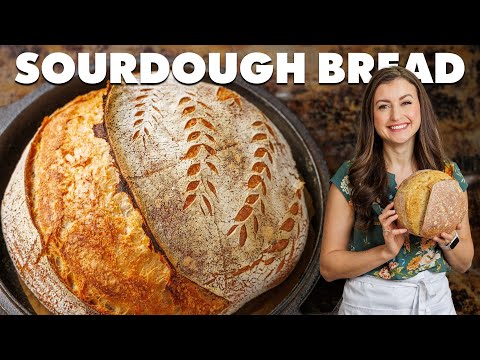
While the classic white Sourdough Bread is a masterpiece, you can easily adapt this recipe to suit your nutritional needs or flavor cravings. I often experiment with heritage grains I find in local markets to add a rustic touch. Here are some healthy and delicious ways to pivot your recipe:
- Whole Wheat Boost: Replace 100g of bread flour with whole wheat or rye flour for an earthier, nuttier taste and extra fiber.
- Seeded Sourdough: Fold in a mix of toasted sunflower seeds, pumpkin seeds, and flaxseeds during the final shaping for added crunch and Omega-3s.
- Herbed Infusion: Add fresh rosemary and cracked black pepper to the dough for a savory Mediterranean twist that pairs perfectly with olive oil.
- Lower Hydration: If you are a beginner, reduce the water by 20g to make the dough easier to handle and shape.
Looking to enhance your sourdough experience? Check out our guide on Flavored Sourdough Bread for creative variations that will bring new life to your baking!
Step-by-Step Instructions
Creating Sourdough Bread is a rhythmic process. It requires you to slow down and listen to the dough. Follow these steps carefully, and do not rush the fermentation; time is your most valuable ingredient in this culinary journey.
- The Levain Mix: Combine your active starter with the warm water in a large glass bowl. Whisk gently until the starter mostly dissolves and the water looks milky.
- The Autolyse: Add the bread flour to the water mixture. Stir with a sturdy spoon or your hands until no dry flour remains. Cover the bowl with a damp cloth and let it rest for 45 minutes. This process allows the flour to hydrate fully.
- Adding Salt: Sprinkle the sea salt over the dough. Use your fingers to dimple the salt into the dough, then fold the dough over itself several times until the salt is fully incorporated.
- Bulk Fermentation & Folds: Over the next 3 to 4 hours, perform “stretch and folds” every 30 minutes. Reach under one side of the dough, pull it upward, and fold it over the center. Rotate the bowl and repeat four times. This builds the strength needed for a tall Sourdough Bread.
- The First Rest: After the final fold, let the dough sit undisturbed in a warm spot (75°F-80°F) until it has grown in volume by about 50% and looks jiggly with visible air bubbles.
- Pre-Shaping: Gently turn the dough onto a lightly floured surface. Fold the edges toward the center to create a loose ball. Let it rest uncovered for 20 minutes to relax the gluten.
- Final Shaping: Flip the dough over and tension-pull it toward you on the counter to create a tight, smooth skin. Place it upside down into a proofing basket (banneton) lined with a floured cloth.
- Cold Proof: Cover the basket and place it in the refrigerator for 12 to 15 hours. This cold ferment is the secret to the deep, tangy flavor of world-class Sourdough Bread.
- Preheat the Oven: Place a Dutch oven inside your oven and preheat to 500°F (260°C) for at least 45 minutes.
- Scoring and Baking: Carefully flip the cold dough onto parchment paper. Use a sharp blade (lame) to score a deep slash across the top. Carefully place the dough into the hot Dutch oven, cover with the lid, and lower the heat to 450°F.
- The Final Reveal: Bake with the lid on for 20 minutes to trap steam. Remove the lid and bake for another 20 to 25 minutes until the crust is a deep, burnished mahogany.
- The Cooling Rule: This is the hardest part! Let your Sourdough Bread cool on a wire rack for at least 2 hours before slicing. Slicing too early traps steam and results in a gummy texture.
Pro Tips for Success
Through years of trial and error in various climates, I have discovered that small details make a massive difference. If you want your Sourdough Bread to look like it came from a high-end Parisian boulangerie, keep these technical tips in mind:
- Check Starter Vitality: Always use the “float test.” Drop a teaspoon of your starter into a glass of water. If it floats, it is ready to bake; if it sinks, it needs more time to ferment.
- Master the Steam: The lid of the Dutch oven is crucial. It traps the moisture escaping from the dough, keeping the surface soft and allowing for maximum “oven spring” before the crust sets.
- Use Weight, Not Volume: Always use a digital scale. Flour density varies wildly by brand and humidity, so measuring by grams is the only way to ensure consistent Sourdough Bread results.
- Watch the Dough, Not the Clock: Fermentation speeds vary based on your kitchen’s temperature. If your house is cold, the bulk ferment might take 6 hours instead of 4. Look for bubbles and a “domed” top.
Want your sourdough to impress with a professional finish? Discover essential techniques in our article on Sourdough Score Ideas to elevate your loaf’s appearance.
Storage & Reheating Tips
Authentic Sourdough Bread lacks the preservatives found in store-bought loaves, so you must store it properly to maintain that incredible texture. For the first 24 hours, keep the loaf cut-side down on a wooden cutting board. After that, store it in a brown paper bag or a beeswax wrap at room temperature.
Avoid the refrigerator, as it crystallizes the starches and makes the bread stale quickly. For long-term storage, slice the loaf and freeze the slices in a sealed bag. When you are ready to eat, simply pop a frozen slice into the toaster. This revives the “just-baked” crunch and warmth perfectly.
What to Serve With This Recipe
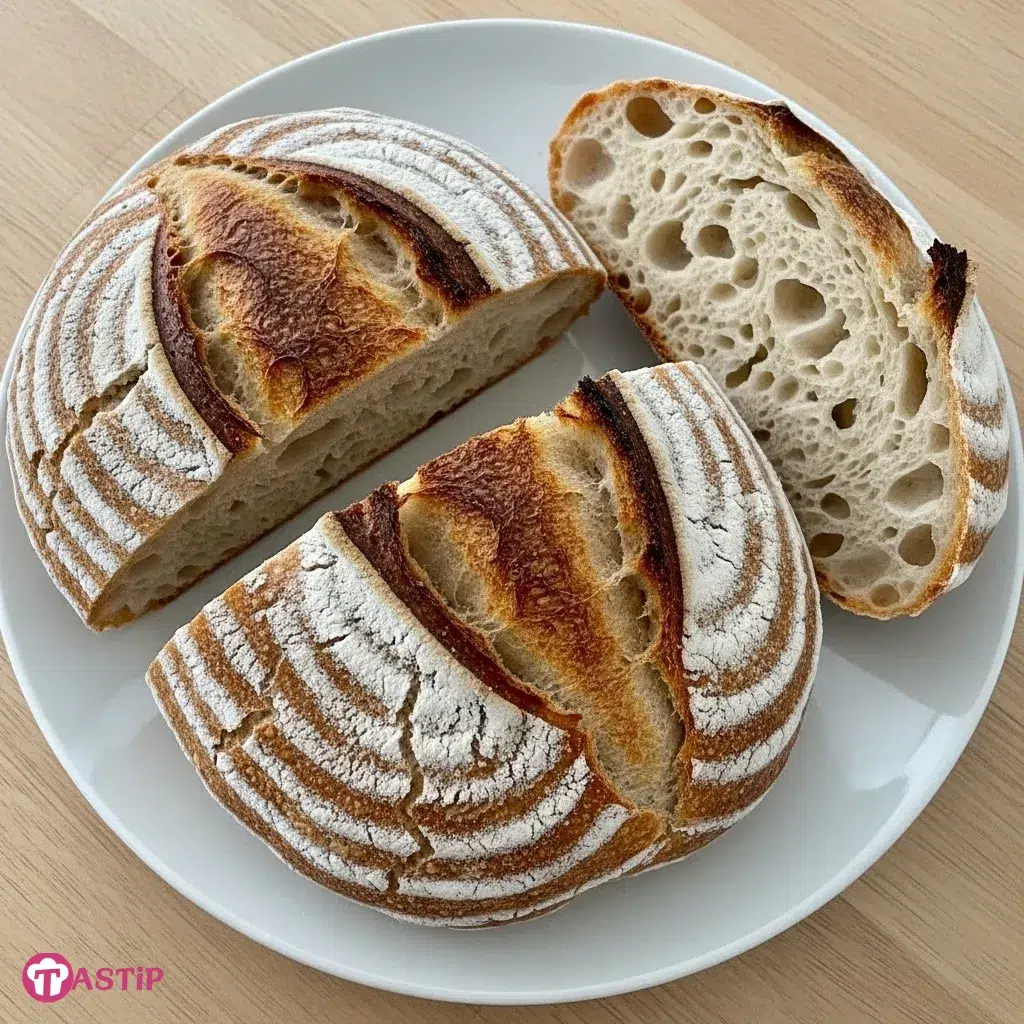
In my travels, I have seen Sourdough Bread served as the centerpiece of many healthy meals. Its robust flavor demands vibrant pairings. I love serving a thick, toasted slice alongside a crisp kale and roasted chickpea salad drizzled with lemon tahini dressing.
It also serves as the perfect vessel for smashed avocado with red pepper flakes and a poached egg. If you are serving dinner, use the bread to mop up the juices from a tray of Mediterranean roasted vegetables—think bell peppers, zucchini, and eggplant roasted with garlic and balsamic vinegar. The acidity of the bread cuts through the richness of olive oil and roasted flavors beautifully.
If you’re searching for delightful ways to serve your sourdough, you’ll love our recipe for Sourdough Croissant Bread Loaf that pairs beautifully with salads and brunch dishes.
FAQs
Why is my sourdough bread so dense?
A dense loaf usually stems from an inactive starter or under-proofing. Ensure your starter is doubling in size consistently before using it. Additionally, make sure the dough has enough time during the bulk fermentation stage to develop those essential air pockets. If the dough doesn’t feel light and airy before shaping, it likely needs more time in a warm spot.
Can I make sourdough bread without a Dutch oven?
Yes, you can! While a Dutch oven is the easiest way to trap steam, you can use a preheated baking stone or a heavy baking sheet. To create steam, place a shallow pan of boiling water on the bottom rack of your oven during the first 20 minutes of baking. This helps achieve that characteristic Sourdough Bread crust and rise.
How do I get a more sour flavor in my loaf?
The “sour” in Sourdough Bread comes from acetic acid. To increase this, lengthen the cold fermentation time in the refrigerator. You can leave the shaped dough in the fridge for up to 24 or even 36 hours. The cold temperature slows down the yeast but allows the lactic acid bacteria to continue producing those tangy flavor compounds.
Sourdough bread is a unique type of bread made through a long fermentation process using naturally occurring wild yeast and lactobacilli. This ancient method, known for its rich flavor and chewy texture, connects bakers to centuries of culinary tradition, allowing you to explore the art of fermentation through a simple ingredient list as you learn more about its history on this page.
Nutrition Information (per serving)
Sourdough is a fantastic choice for those seeking a more mindful approach to carbohydrates. Because of the long fermentation, it has a lower glycemic index than standard white bread. Here is the nutritional breakdown for one thick slice (approximately 50g) of home-baked Sourdough Bread:
| Nutrient | Amount per Serving |
|---|---|
| Calories | 185 kcal |
| Total Carbohydrates | 36g |
| Dietary Fiber | 2g |
| Protein | 6g |
| Total Fat | 1g |
| Sugars | 0g |

Sourdough Bread
- Total Time: 60 mins
- Yield: 1 loaf 1x
- Diet: Contains Gluten
Description
This Sourdough Bread recipe guides you through the art of crafting a tangy, flavorful loaf using simple ingredients and techniques. The long fermentation brings unmatched depth and an incredible texture to your bread.
Ingredients
100 grams Active Sourdough Starter
350 grams Warm Filtered Water
500 grams Unbleached Bread Flour
10 grams Fine Sea Salt
Instructions
- Combine your active starter with the warm water in a large glass bowl and whisk gently until mostly dissolved
- Add the bread flour to the water mixture and stir until no dry flour remains. Cover and rest for 45 minutes
- Sprinkle the sea salt over the dough and incorporate it by folding the dough over itself until fully mixed
- Perform 'stretch and folds' every 30 minutes for 3 to 4 hours
- After the final fold, let the dough sit until it has grown in volume by about 50%
- Pre-shape the dough into a loose ball and rest for 20 minutes
- Final shape the dough and place it upside down in a floured proofing basket
- Cover and cold proof in the refrigerator for 12 to 15 hours
- Preheat a Dutch oven to 500°F (260°C) for at least 45 minutes
- Score the cold dough and carefully bake it in the Dutch oven at 450°F for 20 minutes covered, then additional 20-25 minutes uncovered
- Let the bread cool on a wire rack for at least 2 hours before slicing
Notes
Ensure your sourdough starter is bubbly and at its peak activity.
For more sour flavor, increase the cold fermentation time.
- Prep Time: 20 mins
- Cook Time: 40 mins
- Category: Bread
- Method: Baking
- Cuisine: American
Nutrition
- Serving Size: 1 slice
- Calories: 185 kcal
- Sugar: 0g
- Sodium: 220 mg
- Fat: 1g
- Saturated Fat: 0g
- Unsaturated Fat: 0.5g
- Trans Fat: 0g
- Carbohydrates: 36g
- Fiber: 2g
- Protein: 6g
- Cholesterol: 0mg