
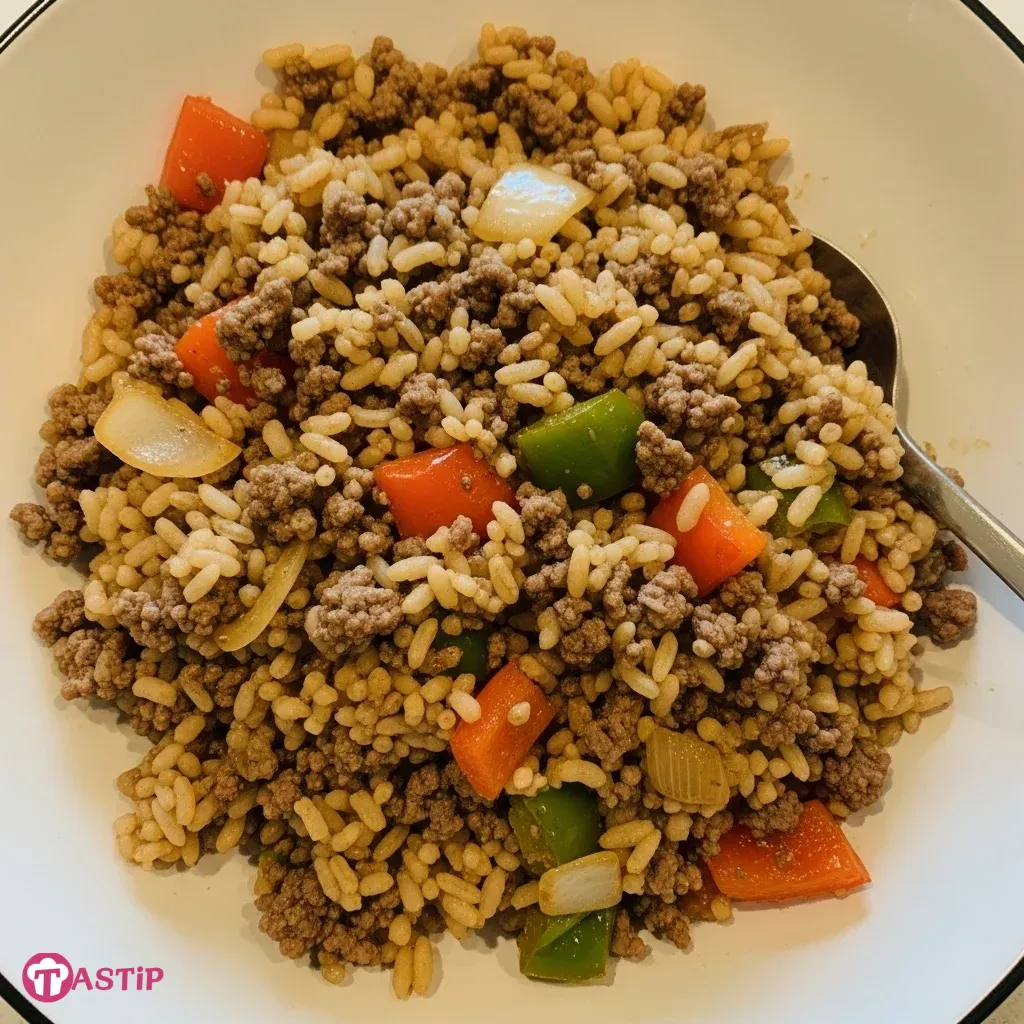
The One-Pan Beef and Rice Skillet delivers a savory, umami-rich experience that bridges the gap between a hearty stew and a fluffy pilaf. This recipe maximizes the Maillard reaction through aggressive searing while utilizing the starch from the grain to create a luscious, velvet-like sauce. You will appreciate the complex depth of flavor achieved by cooking every component in a single vessel.
This One-Pan Beef and Rice Skillet relies on precise heat management and liquid-to-solid ratios to ensure perfectly cooked rice and tender beef. By the end of this guide, you will understand the mechanics of moisture absorption and fat emulsification in one-pot meals. Let’s dive into the science of why this One-Pan Beef and Rice Skillet is a weeknight game-changer for any home cook.
Why You’ll Love This One-Pan Beef and Rice Skillet
- Maximum Flavor Development: Cooking the rice in the same pan as the beef allows the grains to absorb the rendered fats and concentrated browned bits.
- Minimal Cleanup: The One-Pan Beef and Rice Skillet uses only one heavy-bottomed pan, saving you precious time and effort in the kitchen.
- Nutritional Balance: This dish combines high-quality protein, complex carbohydrates, and essential vitamins from fresh vegetables in a single serving.
Ingredients You’ll Need
To achieve the best results with your One-Pan Beef and Rice Skillet, quality is paramount. I recommend using 85/15 lean ground beef to ensure enough fat for flavor without making the dish greasy. For the rice, long-grain white varieties provide the best structural integrity under high heat.
| Ingredient | Quantity | Purpose |
| Ground Beef (85/15) | 1 lb | Main protein and source of fat for searing. |
| Long-Grain White Rice | 1 cup | Structural carbohydrate that absorbs the cooking liquid. |
| Beef Broth (Low Sodium) | 2 cups | The primary hydrating agent for the rice grains. |
| Yellow Onion | 1 medium, diced | Provides aromatic base and natural sugars for caramelization. |
| Bell Peppers | 2 medium, diced | Adds vitamin C and a sweet, crisp contrast to the savory beef. |
| Garlic | 3 cloves, minced | Contains allicin for deep savory notes. |
| Olive Oil | 1 tablespoon | Facilitates heat transfer during the initial sear. |
| Smoked Paprika | 1 teaspoon | Adds a depth of earthiness and mild heat. |
| Salt and Black Pepper | To taste | Essential mineral seasoning to enhance all ingredients. |
Substitutions & Variations
Note: This video is for demonstration purposes and may use a slightly different method.

While the classic One-Pan Beef and Rice Skillet is a masterpiece of balance, you may want to experiment with healthier alternatives based on your dietary needs. Substituting ground beef with ground turkey or lean bison can reduce total fat while maintaining protein density. If you prefer a more fibrous texture, you can use brown rice, though you must increase the liquid-to-rice ratio to 2.5:1 and extend the simmering time to approximately 45 minutes.
For a lower-glycemic option, consider replacing white rice with quinoa. Quinoa cooks faster and provides a higher concentration of amino acids.
If you are monitoring your sodium intake, always opt for “no salt added” broth and use fresh herbs like parsley or cilantro to provide flavor peaks without the need for excess salt. Adding chopped kale or spinach at the very end of the cooking process is an excellent way to boost the micronutrient profile of your One-Pan Beef and Rice Skillet without altering the core flavor architecture.
While experimenting with healthier alternatives is important, you might find that the delightful flavors of the One-Pan Chicken with Buttered Noodles could be a fantastic addition to your repertoire. Check out this recipe for a delicious option that complements the rich flavors of beef and rice, creating a diverse meal plan. One-Pan Chicken with Buttered Noodles
Step-by-Step Instructions
- Sear the Beef: Heat the olive oil in a large, heavy skillet over medium-high heat. Add the ground beef, breaking it into small pieces with a spatula. Cook until the beef is deeply browned. This step is crucial for the One-Pan Beef and Rice Skillet because it creates “fond”—those brown bits stuck to the pan that contain concentrated flavor.
- Sauté the Aromatics: Add the diced onions and bell peppers directly to the skillet with the beef. Cook for 4 to 5 minutes until the onions are translucent. The moisture from the vegetables will begin to loosen the fond from the bottom of the pan.
- Toast the Rice: Add the dry rice to the skillet. Stir constantly for 2 minutes. This “toasting” process, known as dextrinization, coats each grain in fat and browns the surface starch. It prevents the One-Pan Beef and Rice Skillet from becoming mushy and ensures a nutty flavor profile.
- Incorporate Spices and Garlic: Stir in the minced garlic and smoked paprika. Cook for only 30 to 60 seconds until fragrant. Garlic burns easily, so monitor the heat closely to avoid a bitter taste.
- Simmer: Pour in the beef broth. Use your spatula to scrape any remaining brown bits from the bottom of the pan. Bring the liquid to a rolling boil, then immediately reduce the heat to a low simmer.
- The Absorption Phase: Cover the skillet with a tight-fitting lid. Let the One-Pan Beef and Rice Skillet simmer for 18 to 20 minutes. Do not lift the lid during this time; the trapped steam is essential for uniform grain hydration.
- Rest and Fluff: Once the liquid is absorbed and the rice is tender, remove the skillet from the heat. Let it sit, covered, for 5 minutes. This allows the residual steam to redistribute, making the rice easier to fluff with a fork.
Pro Tips for Success
As a chef, I cannot stress enough the importance of the skillet you choose. A heavy-bottomed cast iron or stainless steel skillet is ideal for a One-Pan Beef and Rice Skillet. These materials provide superior heat retention and distribution, which prevents the rice from scorching in some spots while remaining undercooked in others. If your lid is not perfectly tight, place a piece of aluminum foil over the pan before putting the lid on to create a better seal.
Furthermore, understand the science of the “rest” period. During the 18 minutes of simmering, the starch granules in the rice swell with water. If you serve the One-Pan Beef and Rice Skillet immediately, the exterior of the grains might be sticky.
Resting allows the starch to firm up slightly through a process called retrogradation, resulting in individual grains that hold their shape. Finally, always taste your broth before adding it. If your broth is bland, your One-Pan Beef and Rice Skillet will be bland. Seasoning the liquid is seasoning the rice from the inside out.
Selecting the right skillet can truly elevate your cooking experience, and if you’re aiming for variety in your meals, consider trying the One-Pan Chicken with Buttered Noodles as well. This dish uses similar techniques and will help you perfect your one-pan cooking skills. One-Pan Chicken with Buttered Noodles
Storage & Reheating Tips
The One-Pan Beef and Rice Skillet keeps remarkably well in the refrigerator for up to 4 days. Store it in an airtight glass container to prevent the rice from absorbing refrigerator odors. Because rice dries out quickly, the reheating process requires a bit of finesse to restore the original texture.
To reheat, place a portion in a microwave-safe bowl and add a teaspoon of water or broth. Cover the bowl with a damp paper towel. This creates a small steam chamber that re-hydrates the starch granules without making the beef rubbery.
Alternatively, you can reheat the One-Pan Beef and Rice Skillet in a pan over low heat with a splash of liquid, stirring frequently. Avoid freezing this dish if possible, as the freezing and thawing process can cause the rice grains to rupture, leading to a grainy or mushy consistency upon reheating.
What to Serve With This One-Pan Beef and Rice Skillet
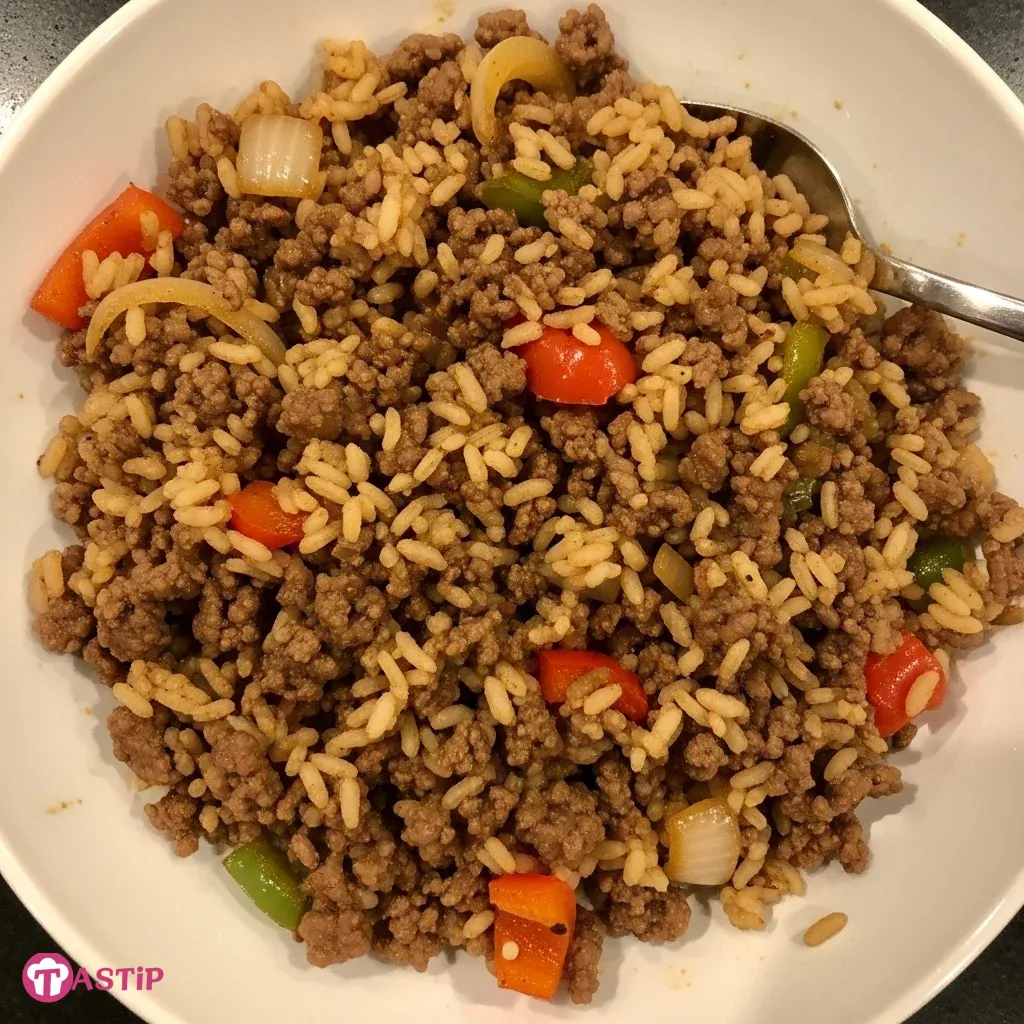
Because the One-Pan Beef and Rice Skillet is a complete meal in terms of macronutrients, you should focus on side dishes that offer high acidity or crunch to balance the richness. A crisp garden salad with a lemon-tahini dressing provides a necessary enzymatic brightness that cuts through the savory beef fat. Roasted cruciferous vegetables, such as broccoli or Brussels sprouts, also pair excellently, adding a charred, bitter note that complements the sweet bell peppers in the skillet.
If you want to keep the meal light, a simple cucumber and red onion salad with apple cider vinegar is a perfect accompaniment. For those looking for more fiber, steamed green beans with a touch of garlic and sea salt will round out the plate beautifully.
The key is to avoid heavy, starchy sides since the One-Pan Beef and Rice Skillet already provides a substantial serving of complex carbohydrates. Instead, prioritize colorful, water-dense vegetables to maximize the nutritional density of your dinner.
To enhance your dining experience, consider pairing your One-Pan Beef and Rice Skillet with a dish like Steak & Shrimp Stir-Fried Noodles. This side not only offers a delightful contrast but also infuses your meal with additional flavors. Steak & Shrimp Stir-Fried Noodles
FAQs
Can I use a different type of rice for this skillet?
Yes, you can adapt the One-Pan Beef and Rice Skillet for different rice varieties. Basmati rice offers a floral aroma and remains very fluffy, while Jasmine rice provides a softer, slightly stickier texture. Just remember that short-grain rice contains more amylopectin and will result in a creamier, more risotto-like consistency. Always adjust your water ratios based on the specific grain’s requirements as noted on the packaging.
Why did my rice turn out crunchy?
Crunchy rice in a One-Pan Beef and Rice Skillet usually stems from two issues: either the heat was too high, causing the liquid to evaporate before the rice could absorb it, or the lid was not sealed tightly enough.
If you find the rice is still hard after the timer goes off, add a quarter cup of hot broth, cover it again, and simmer for an additional 5 minutes. Never add cold liquid, as it will drop the temperature and interfere with the cooking cycle.
Is it necessary to drain the fat from the beef?
This depends on the fat percentage of your meat. If you use 80/20 beef for your One-Pan Beef and Rice Skillet, you will likely have excess rendered fat. I recommend spooning out all but one tablespoon of the liquid fat before adding the rice.
Too much fat will prevent the rice from absorbing the broth efficiently and can result in a greasy mouthfeel. However, keeping a small amount of fat is vital for toasting the rice and carrying the flavor of the aromatics.
One-Pan meals, such as the One-Pan Beef and Rice Skillet, have gained popularity for their convenience and flavor. These dishes allow for several ingredients to meld together, creating a cohesive flavor profile in a single cooking vessel. For more details on this cooking style, visit the Cooking page.
Nutrition Information (per serving)
The following values are estimates based on a four-serving yield for the One-Pan Beef and Rice Skillet. Actual numbers may vary based on the specific brands of ingredients used.
| Metric | Value |
| Calories | 425 kcal |
| Total Fat | 18g |
| Saturated Fat | 7g |
| Protein | 26g |
| Carbohydrates | 38g |
| Dietary Fiber | 3g |
| Sodium | 680mg |
The One-Pan Beef and Rice Skillet is a testament to the efficiency of modern home cooking without sacrificing the scientific principles of flavor development. By mastering the sear, the toast, and the simmer, you transform simple pantry staples into a gourmet meal. I encourage you to pay attention to the textures and aromas at each stage.
Cooking is not just following a list of steps; it is an observation of chemical changes. Once you master this One-Pan Beef and Rice Skillet, you will have the foundation to create dozens of other one-pot variations using the same fundamental techniques.
Print
One-Pan Beef and Rice Skillet
- Total Time: 40 mins
- Yield: 4 servings 1x
- Diet: Gluten Free
Description
The One-Pan Beef and Rice Skillet delivers a savory, umami-rich experience that bridges the gap between a hearty stew and a fluffy pilaf, maximizing flavor using the Maillard reaction and creating a luscious sauce.
Ingredients
1 lb Ground Beef (85/15)
1 cup Long-Grain White Rice
2 cups Beef Broth (Low Sodium)
1 medium Yellow Onion, diced
2 medium Bell Peppers, diced
3 cloves Garlic, minced
1 tablespoon Olive Oil
1 teaspoon Smoked Paprika
Salt and Black Pepper to taste
Instructions
- Heat the olive oil in a large, heavy skillet over medium-high heat. Add the ground beef, breaking it into small pieces with a spatula. Cook until the beef is deeply browned
- Add the diced onions and bell peppers directly to the skillet with the beef. Cook for 4 to 5 minutes until the onions are translucent
- Add the dry rice to the skillet. Stir constantly for 2 minutes to toast the rice
- Stir in the minced garlic and smoked paprika. Cook for 30 to 60 seconds until fragrant
- Pour in the beef broth and scrape any remaining brown bits from the bottom of the pan. Bring to a boil, then reduce to a low simmer
- Cover and let simmer for 18 to 20 minutes without lifting the lid
- Once the liquid is absorbed and rice is tender, remove from heat. Let it sit covered for 5 minutes before fluffing with a fork
Notes
Use a heavy-bottomed skillet for better heat retention and distribution.
If using brown rice, increase the liquid-to-rice ratio and simmer longer.
- Prep Time: 20 mins
- Cook Time: 20 mins
- Category: Dinner
- Method: One-Pan Cooking
- Cuisine: American
Nutrition
- Serving Size: 1 bowl
- Calories: 425 kcal
- Sugar: 2 g
- Sodium: 680 mg
- Fat: 18 g
- Saturated Fat: 7 g
- Unsaturated Fat: unknown
- Trans Fat: unknown
- Carbohydrates: 38 g
- Fiber: 3 g
- Protein: 26 g
- Cholesterol: unknown