
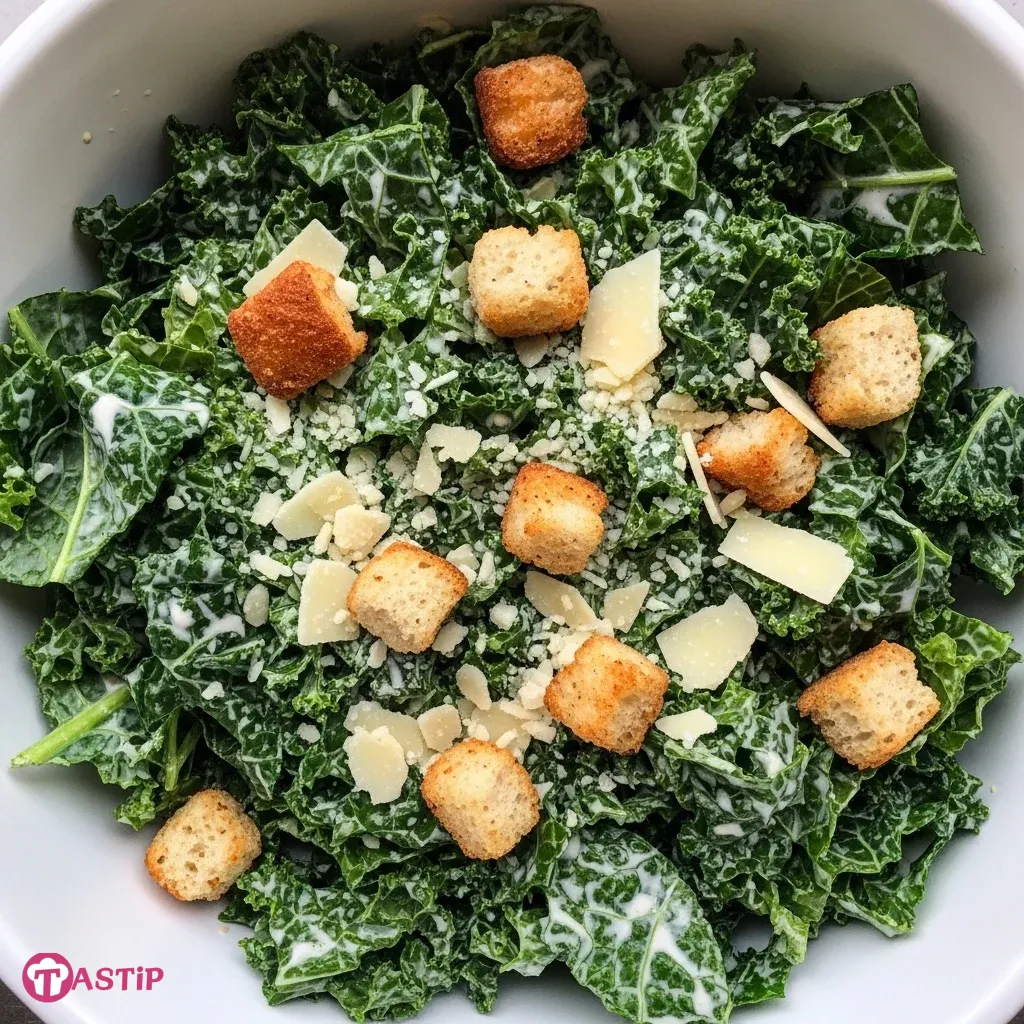
The Kale Caesar Salad represents the ultimate evolution of a classic culinary staple. By swapping delicate romaine for hearty kale, you transform a light side dish into a robust, nutrient-dense meal that maintains its structural integrity. As a former test kitchen chef, I find the Kale Caesar Salad fascinating because it challenges the traditional boundaries of salad construction.
The leaves offer a bitter complexity that balances the rich, salty notes of the dressing perfectly. You will notice that the texture remains crisp even after several hours, unlike traditional greens that wilt instantly under acidity. This recipe delivers a satisfying crunch and a deep umami profile that satisfies the palate. Understanding the interaction between the fibrous kale and the creamy emulsion is the secret to a perfect Kale Caesar Salad.
Why You’ll Love This Recipe
- Nutritional Density: The Kale Caesar Salad provides significantly more Vitamin K, Vitamin C, and fiber than the romaine version.
- Superior Longevity: This salad thrives when prepared in advance because the kale leaves do not lose their structural rigidity.
- Textural Harmony: The combination of massaged greens, crunchy croutons, and silky dressing creates a multi-dimensional mouthfeel.
- Flavor Complexity: You get a sophisticated balance of bitterness, acidity, saltiness, and creaminess in every single bite.
Ingredients You’ll Need
| Ingredient | Quantity | Function in the Recipe |
|---|---|---|
| Lacinato (Dino) Kale | 2 large bunches | Provides the structural base and a mild, nutty bitterness. |
| Extra Virgin Olive Oil | 1/2 cup | Acts as the lipid base for the emulsion and carries fat-soluble flavors. |
| Fresh Egg Yolk | 1 large | The primary emulsifier that binds the oil and acid together. |
| Anchovy Fillets | 4-5 fillets | Provides deep umami and essential salinity without a “fishy” taste. |
| Fresh Lemon Juice | 3 tablespoons | The acid source that brightens the dish and denatures kale fibers. |
| Garlic Cloves | 2 small cloves | Contains allicin, which provides a pungent, aromatic kick. |
| Parmigiano-Reggiano | 1/2 cup, grated | Adds aged complexity and helps thicken the dressing naturally. |
| Dijon Mustard | 1 teaspoon | A secondary emulsifier that adds a sharp, tangy undertone. |
| Sourdough Bread | 2 cups, cubed | The base for croutons, offering a crunchy contrast to the leaves. |
Substitutions & Variations
Note: This video is for demonstration purposes and may use a slightly different method.

To keep your Kale Caesar Salad healthy and cater to different dietary needs, you can explore several smart substitutions. If you prefer a vegetarian version, replace the anchovies with one tablespoon of white miso paste or capers. Miso provides that necessary fermented umami profile that the Kale Caesar Salad requires.
For those avoiding raw eggs, substitute the egg yolk and oil with a high-quality Greek yogurt base. This creates a high-protein, lower-calorie version that still coats the leaves effectively. If Lacinato kale is unavailable, curly kale works well, though it requires more vigorous massaging to soften the tougher cellulose walls.
You can also swap the sourdough croutons for toasted chickpeas to increase the fiber and protein content while maintaining that essential crunch. Finally, a sprinkle of nutritional yeast can enhance the cheesy flavor if you want to reduce the amount of dairy used in your Kale Caesar Salad.
Consider enhancing your Kale Caesar Salad experience by trying a refreshing Kale Pineapple Green Smoothie. This smoothie not only aligns with your healthy lifestyle but also complements the salad’s flavors beautifully; you can discover the recipe here.
Step-by-Step Instructions
- Prepare the Kale: Strip the kale leaves away from the woody central ribs. Discard the ribs or save them for juicing. Wash the leaves thoroughly in cold water and dry them completely using a salad spinner. Moisture is the enemy of a good Kale Caesar Salad because it prevents the dressing from adhering to the leaves.
- Massaging the Greens: Place the dry kale in a large mixing bowl. Add a small pinch of salt and a teaspoon of olive oil. Use your hands to firmly massage the leaves for 2 to 3 minutes. You will see the leaves turn a darker green and shrink in volume. This process breaks down the tough cellulose and makes the Kale Caesar Salad much easier to digest.
- Create the Umami Base: On a cutting board, mince the garlic and anchovies together. Use the flat side of your knife to scrape and mash them into a smooth paste. This ensures that the flavor distributes evenly throughout the Kale Caesar Salad dressing without leaving large, pungent chunks.
- Emulsify the Dressing: In a medium bowl, whisk the egg yolk, lemon juice, and Dijon mustard. Slowly, drop by drop, whisk in the olive oil. Start very slowly to establish the emulsion. Once the mixture thickens, you can pour the oil in a steady, thin stream. Whisk until the dressing is thick and creamy. Fold in the garlic-anchovy paste and half of the Parmesan cheese.
- Toast the Croutons: Toss the sourdough cubes with a drizzle of olive oil and a pinch of salt. Roast them at 375°F (190°C) until they are golden brown and crisp. The Maillard reaction here provides a toasted flavor that complements the nutty notes of the Kale Caesar Salad.
- Final Assembly: Pour the dressing over the massaged kale. Use tongs or your hands to ensure every leaf is thoroughly coated. Add the croutons and the remaining Parmigiano-Reggiano. Toss one last time before serving your masterpiece.
Pro Tips for Success
Success with a Kale Caesar Salad depends on the science of emulsification and mechanical breakdown. First, always ensure your egg yolk and oil are at room temperature. Room temperature fats and proteins bond more easily, creating a more stable emulsion that won’t break.
Second, do not skip the massaging step. Kale contains a high amount of insoluble fiber; massaging it physically disrupts these fibers and releases trapped sugars, making the salad sweeter and softer. Furthermore, I recommend using a microplane for the garlic.
This maximizes the surface area, releasing more allicin and providing a more intense flavor profile. If the dressing feels too thick, add a teaspoon of warm water rather than more oil. The water thins the consistency without altering the fat balance.
Lastly, always season your Kale Caesar Salad with freshly cracked black pepper at the very end. The piperine in the pepper provides a floral heat that cuts through the richness of the dressing.
To perfect your Kale Caesar Salad, understanding the science behind emulsification is key, and you can further explore this topic with a delicious Kale Chicken Caesar Pasta Salad. It’s a unique twist that retains the classic flavors while adding a hearty component; check it out here.
Storage & Reheating Tips
The Kale Caesar Salad is one of the few salads that actually tastes better the next day. Because kale is so hardy, it can sit in the dressing overnight without becoming soggy. Store any leftovers in an airtight container in the refrigerator for up to three days.
The acidity in the lemon juice will continue to tenderize the kale over time. However, I suggest storing the croutons separately in a dry pantry container. If you store them with the salad, they will absorb moisture and lose their crunch.
You do not need to reheat this dish; it is best enjoyed cold or at room temperature. If the dressing has thickened too much in the fridge, let the Kale Caesar Salad sit on the counter for ten minutes before eating to allow the oils to soften.
What to Serve With This Recipe
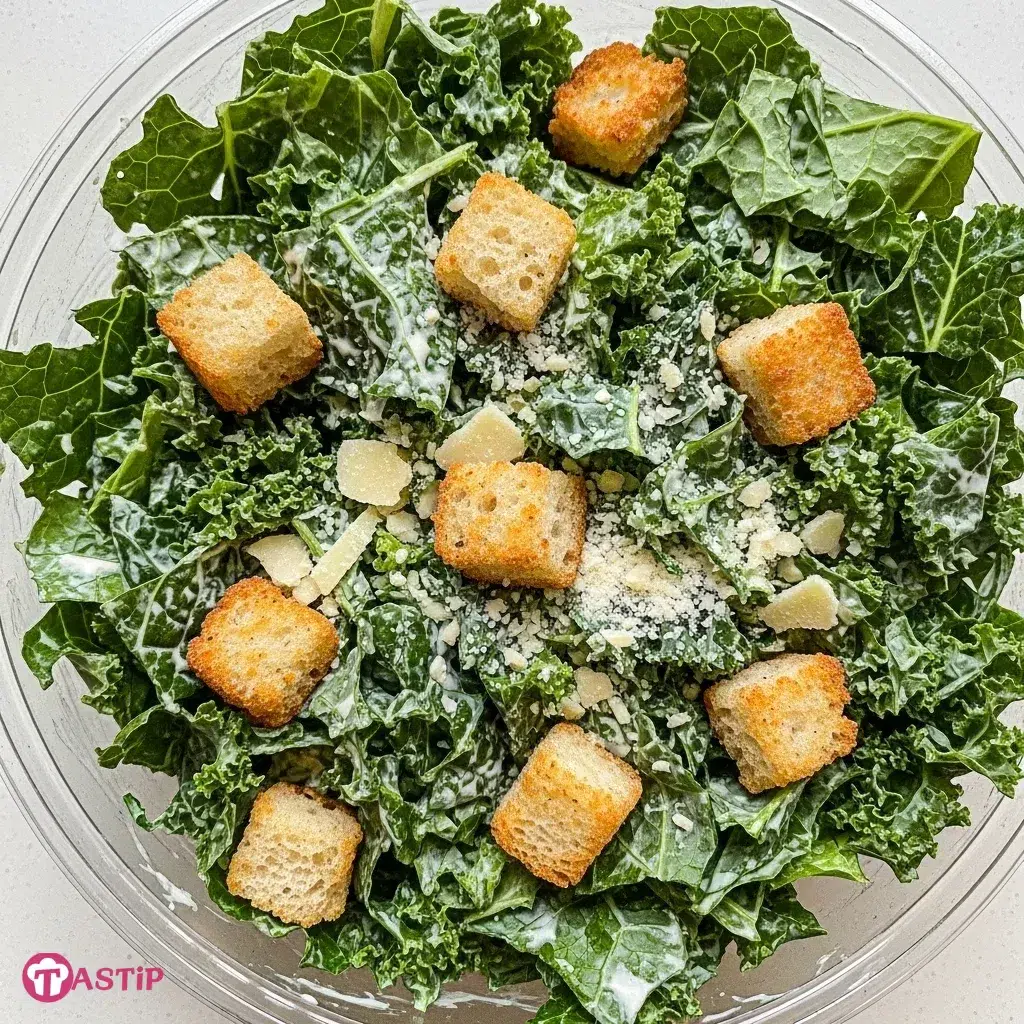
The Kale Caesar Salad is incredibly versatile and pairs beautifully with various proteins and side dishes. For a complete heart-healthy meal, serve it alongside a piece of pan-seared wild salmon. The omega-3 fats in the salmon complement the creamy dressing perfectly.
Roasted chicken breast or grilled shrimp are also excellent choices that add lean protein to your Kale Caesar Salad. If you want to keep the meal vegetarian, consider serving it with a side of roasted root vegetables, such as carrots or parsnips.
The sweetness of the roasted vegetables creates a beautiful contrast with the salty, savory notes of the Caesar dressing. You could also pair it with a light vegetable soup or a piece of crusty whole-grain bread to round out the textures.
If you’re looking to create a complete meal, consider serving your Kale Caesar Salad alongside Jello Sugar Cookies for a delightful contrast in flavors. This dynamic duo will impress your guests and make for a memorable dining experience; find the cookie recipe here.
FAQs
Can I make this salad ahead of time?
Yes, the Kale Caesar Salad is ideal for meal prep. Unlike romaine, which wilts within 20 minutes of dressing, kale can stay dressed for several hours or even overnight. The leaves are strong enough to withstand the salt and acid without losing their pleasant crunch.
Is the raw egg yolk safe to consume?
In a traditional Kale Caesar Salad, the raw yolk is the key to the creamy texture. If you have concerns about raw eggs, you can use pasteurized eggs found at most grocery stores. Alternatively, you can use a tablespoon of high-quality mayonnaise as a shortcut, as it is already a stable egg-based emulsion.
How do I make the kale less bitter?
The bitterness in a Kale Caesar Salad comes from compounds called glucosinolates. Massaging the kale with salt and lemon juice helps neutralize these compounds. Additionally, ensuring you remove the thick, woody stems significantly reduces the overall bitterness of the final dish.
The Kale Caesar Salad is a flavorful variation of the traditional Caesar salad that replaces romaine lettuce with kale, adding more nutritional benefits and a unique texture. This twist not only enhances the flavor profile but also provides a robust dish that holds up well even after sitting, making it an excellent choice for meal prep and gatherings, as detailed in the Salad article.
Nutrition Information (per serving)
The following data reflects a single serving of Kale Caesar Salad, including dressing and croutons.
| Nutrient | Amount per Serving |
|---|---|
| Calories | 345 kcal |
| Total Fat | 26g |
| Saturated Fat | 6g |
| Protein | 12g |
| Total Carbohydrates | 18g |
| Dietary Fiber | 4g |
| Sodium | 580mg |

Kale Caesar Salad
- Total Time: 30 mins
- Yield: 4 servings 1x
- Diet: Vegetarian
Description
The Kale Caesar Salad represents the ultimate evolution of a classic culinary staple. By swapping delicate romaine for hearty kale, you transform a light side dish into a robust, nutrient-dense meal that maintains its structural integrity. This recipe delivers a satisfying crunch and a deep umami profile that satisfies the palate.
Ingredients
2 large bunches Lacinato Kale
1/2 cup Extra Virgin Olive Oil
1 large Fresh Egg Yolk
4–5 fillets Anchovy Fillets
3 tablespoons Fresh Lemon Juice
2 small cloves Garlic Cloves
1/2 cup Parmigiano-Reggiano, grated
1 teaspoon Dijon Mustard
2 cups Sourdough Bread, cubed
Instructions
- Prepare the Kale: Strip the kale leaves away from the woody central ribs. Wash the leaves thoroughly in cold water and dry them completely
- Massaging the Greens: Place dry kale in a large mixing bowl. Add a small pinch of salt and a teaspoon of olive oil. Massage the leaves for 2 to 3 minutes
- Create the Umami Base: Mince garlic and anchovies together into a smooth paste
- Emulsify the Dressing: Whisk egg yolk, lemon juice, and Dijon mustard in a medium bowl. Slowly whisk in the olive oil
- Toast the Croutons: Toss sourdough cubes with a drizzle of olive oil and a pinch of salt. Roast at 375°F (190°C) until golden brow
- Final Assembly: Pour dressing over massaged kale, toss with croutons and remaining Parmigiano-Reggiano
Notes
Store leftovers in an airtight container in the refrigerator for up to three days.
- Prep Time: 20 mins
- Cook Time: 10 mins
- Category: Dinner
- Method: Baking
- Cuisine: American
Nutrition
- Serving Size: 1 bowl
- Calories: 345 kcal
- Sugar: 1 g
- Sodium: 580 mg
- Fat: 26 g
- Saturated Fat: 6 g
- Unsaturated Fat: n/a
- Trans Fat: n/a
- Carbohydrates: 18 g
- Fiber: 4 g
- Protein: 12 g
- Cholesterol: 186 mg