
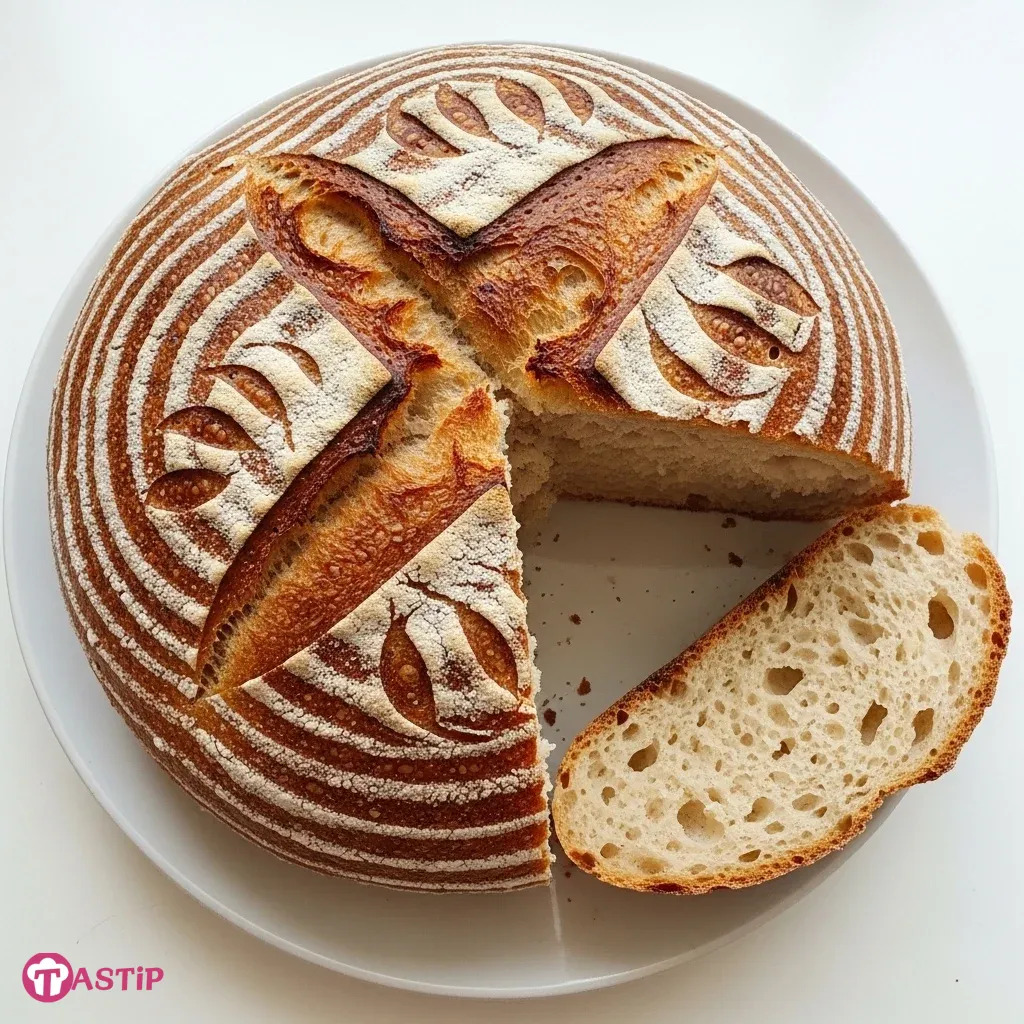
I have trekked through the misty highlands of Ethiopia and explored the sun-drenched bakeries of San Francisco to find the soul of bread. Nothing connects a traveler to the earth quite like Artisan Sourdough Bread with Decorative Scoring. This bread is not just food; it is a living history that you cultivate in your own kitchen.
You will experience a shatteringly crisp crust and a tangy, airy crumb that dances on your palate. The process requires patience, but the artistic reward of a beautifully etched loaf is incomparable. Creating Artisan Sourdough Bread with Decorative Scoring allows you to channel your inner artist while mastering the ancient chemistry of wild yeast. Every slice tells a story of fermentation, heat, and handcrafted passion.
Why You’ll Love This Artisan Sourdough Bread with Decorative Scoring
- Unrivaled Flavor Profile: The slow fermentation process creates deep, complex tangy notes that commercial yeast simply cannot replicate.
- Artistic Expression: You turn a simple loaf into a centerpiece by using a blade to create intricate, beautiful patterns.
- Superior Digestive Health: The natural fermentation breaks down gluten and phytic acid, making this bread easier on your stomach and more nutrient-dense.
- Soulful Satisfaction: There is a meditative joy in the rhythmic folding of the dough and the final reveal of the golden crust.
Ingredients You’ll Need
To create a truly authentic Artisan Sourdough Bread with Decorative Scoring, you must source the highest quality ingredients. Flour is the foundation of your journey. Use organic, unbleached bread flour to ensure your wild yeast thrives without chemical interference.
Water choice also matters; use filtered water to avoid chlorine, which can stun your delicate starter. The salt should be a high-quality sea salt or Himalayan pink salt to provide a clean, mineral finish to the dough.
| Ingredient | Quantity | Purpose |
|---|---|---|
| Active Sourdough Starter | 100 grams | Provides the wild yeast and leavening power. |
| Organic Bread Flour | 500 grams | Creates the strong gluten structure for height. |
| Filtered Water (Warm) | 350 grams | Hydrates the flour and activates the fermentation. |
| Fine Sea Salt | 10 grams | Regulates fermentation and enhances flavor profile. |
| Rice Flour (for dusting) | 20 grams | Prevents sticking and highlights the decorative scoring. |
Substitutions & Variations
Note: This video is for demonstration purposes and may use a slightly different method.

While the classic Artisan Sourdough Bread with Decorative Scoring relies on simplicity, you can adapt it to your nutritional needs. If you want a more rustic flavor, replace 100 grams of bread flour with whole wheat or rye flour. This adds a nutty depth and increases the fiber content significantly.
For those seeking an ancient grain experience, spelt flour works beautifully, though it requires a gentler touch during the folding process. If you find the crust browns too slowly, a teaspoon of raw honey added to the water can encourage caramelization without adding refined sugar. Always remember that sourdough is a living thing; small changes in flour will change how the dough feels and breathes.
As you explore variations in the dough, consider using different flours for a unique twist. For more insights on crafting various types, check out this Sourdough Bread guide.
Step-by-Step Instructions
- Prepare Your Levain: Mix 20 grams of your mature starter with 40 grams of bread flour and 40 grams of water. Let this sit in a warm spot for 6 to 8 hours until it bubbles and doubles in size. This ensures your Artisan Sourdough Bread with Decorative Scoring has maximum lift.
- The Autolyse Phase: Combine your active levain with the 350 grams of warm filtered water. Stir in the 500 grams of bread flour until no dry bits remain. Cover the bowl and let it rest for 45 minutes to allow the flour to fully hydrate and begin gluten development.
- Incorporate the Salt: Sprinkle the sea salt over the dough. Use your fingers to dimple the salt into the mass, then fold the dough over itself several times. This step strengthens the structure of your Artisan Sourdough Bread with Decorative Scoring.
- Bulk Fermentation and Folds: Over the next 3 to 4 hours, perform a series of “stretch and folds” every 30 minutes. Reach under the dough, pull it upward, and fold it over the center. Repeat this four times around the bowl. This builds the tension needed for a great crumb.
- Pre-Shaping: Gently turn the dough onto a lightly floured surface. Fold the edges toward the center to create a loose ball. Let it rest uncovered for 20 minutes to relax the gluten.
- Final Shaping: Flip the dough over and tension it by pulling it toward you on the counter. Place it upside down into a proofing basket (banneton) dusted heavily with rice flour.
- Cold Retard: Cover the basket and place it in the refrigerator for 12 to 15 hours. This cold fermentation develops the signature tang of the Artisan Sourdough Bread with Decorative Scoring and makes the surface easier to score.
- Preheat and Prepare: Place a Dutch oven inside your oven and preheat to 500°F (260°C). Once hot, flip the cold dough onto a piece of parchment paper. Brush off excess flour and dust with a fresh, thin layer of rice flour for contrast.
- Decorative Scoring: Use a very sharp bread lame or razor blade. First, make a deep “expansion cut” about half an inch deep along one side. Then, use light, shallow strokes to etch wheat stalks or geometric patterns on the other side. This is the heart of Artisan Sourdough Bread with Decorative Scoring.
- The Bake: Carefully lower the parchment into the hot Dutch oven. Cover with the lid and bake for 20 minutes. Remove the lid, lower the temperature to 450°F (230°C), and bake for another 20 to 25 minutes until the crust reaches a deep mahogany color.
Pro Tips for Success
Mastering Artisan Sourdough Bread with Decorative Scoring requires an understanding of thermodynamics and hydration. Always use a digital scale; precision is the difference between a flat pancake and a towering loaf. If your kitchen is cold, your fermentation will take longer.
You should look for the dough to increase in volume by about 50% and feel full of air before shaping. For the best decorative results, ensure the dough is cold when you score it. Cold dough provides resistance to the blade, allowing for much cleaner lines.
Furthermore, steam is your best friend. The lid of the Dutch oven traps the steam escaping from the dough, which keeps the surface supple and allows for a massive “oven spring.”
When you perform your Artisan Sourdough Bread with Decorative Scoring, think of the blade as a pen. Hold the lame at a 45-degree angle for your main expansion score to create a beautiful “ear.” For the decorative elements, hold the blade vertically and barely graze the surface.
This creates a ghost-like pattern that remains delicate after the bread expands. If you want a whiter contrast, use a small sieve to dust the dough with white rice flour before you start etching your designs.
Understanding the nuances of hydration and temperature is crucial for achieving the best texture in your bread. For more specialized baking techniques, delve into our Sourdough Croissant Loaf resource.
Storage & Reheating Tips
To preserve the integrity of your Artisan Sourdough Bread with Decorative Scoring, never store it in plastic. Plastic traps moisture and turns that glorious, crackling crust into a rubbery mess. Instead, wrap the cooled loaf in a clean linen cloth or place it in a brown paper bag.
It will stay fresh at room temperature for up to three days. If you find the bread has hardened, you can revive it easily. Lightly mist the crust with water and place the loaf in a 350°F (175°C) oven for 10 minutes. This restores the crunch while keeping the interior soft.
For long-term storage, Artisan Sourdough Bread with Decorative Scoring freezes exceptionally well. Slice the bread first, then place the slices in a freezer-safe bag. You can toast individual slices directly from the freezer.
This method ensures you always have a piece of artisan quality bread ready for breakfast or dinner. Avoid the refrigerator at all costs, as the cold air actually accelerates the staling process through a phenomenon called starch retrogradation.
What to Serve With This Recipe
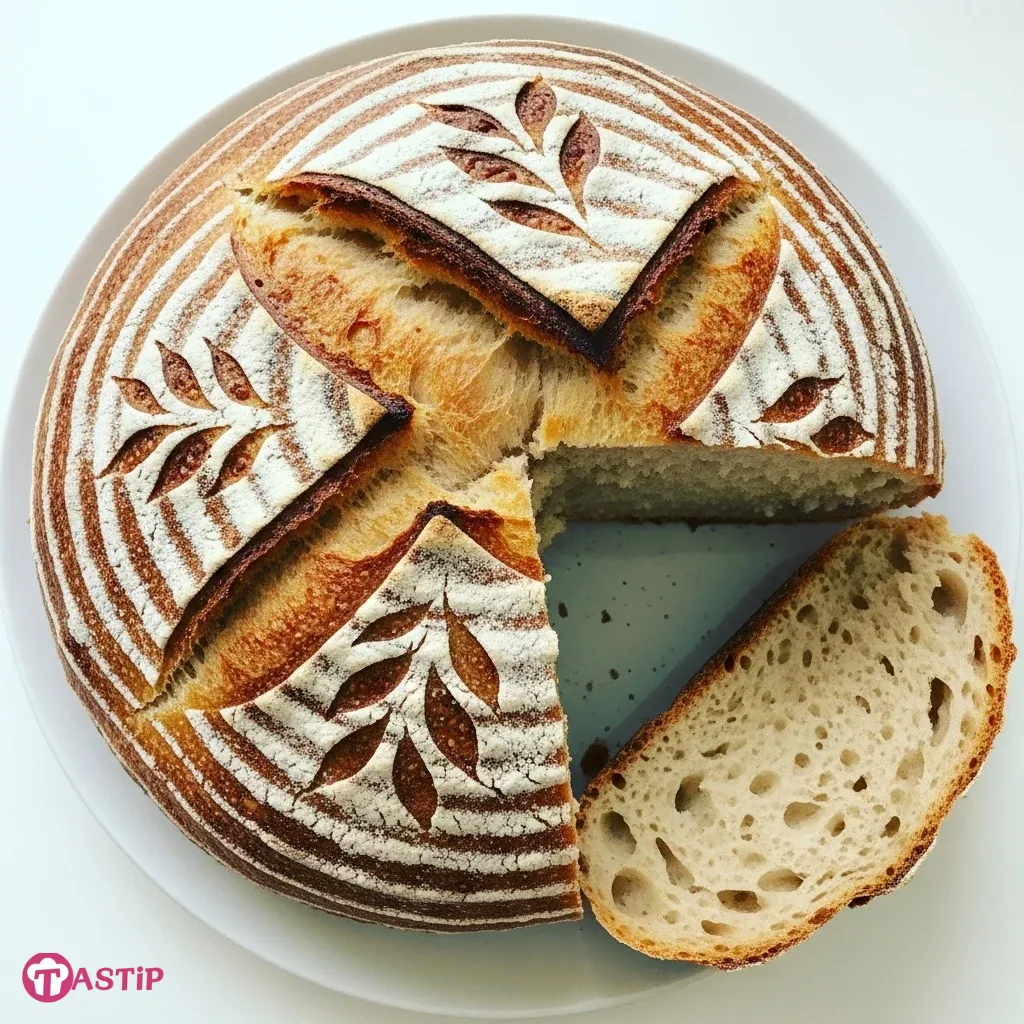
This bread deserves pairings that respect its complex flavor. I love serving a thick slice of Artisan Sourdough Bread with Decorative Scoring alongside a vibrant Mediterranean salad. The acidity of a lemon-tahini dressing complements the sourdough’s tang perfectly.
You can also pair it with roasted root vegetables, such as carrots and parsnips, drizzled with high-quality olive oil and rosemary. The earthy sweetness of the vegetables provides a beautiful contrast to the savory, fermented notes of the loaf.
If you want a simpler experience, enjoy the Artisan Sourdough Bread with Decorative Scoring with a bowl of homemade tomato and basil soup. The crunchy crust acts as the perfect vessel for soaking up the rich broth. For a global twist, try it with a dollop of spicy shakshuka.
The bold spices of North Africa melt into the airy crumb of the sourdough, creating a breakfast that fuels any adventure. Whatever you choose, ensure the ingredients are fresh and authentic to match the quality of your bread.
Pairing is key to enjoying your Artisan Sourdough Bread to the fullest, enhancing its complex flavor profile. To discover more about different ways to enjoy this wonderful bread, visit our Sourdough Bread section.
FAQs
How do I know if my starter is strong enough for Artisan Sourdough Bread with Decorative Scoring?
Perform the “float test” before you begin. Take a small teaspoon of your active starter and drop it into a glass of water. If it floats on the surface, the yeast has produced enough carbon dioxide to lift the dough.
If it sinks, your starter needs more feedings or more time to peak. A strong starter is the secret to the perfect Artisan Sourdough Bread with Decorative Scoring.
Why did my decorative scoring disappear after baking?
This usually happens if you score too deeply or if the dough is over-proofed. When the dough loses its structural integrity, it cannot hold the fine lines of the pattern. Ensure you follow the cold retard step in the refrigerator. This firms up the dough and helps the Artisan Sourdough Bread with Decorative Scoring retain its intricate details as it expands in the heat of the oven.
Can I make this recipe without a Dutch oven?
Yes, you can, but you must create an artificial steam environment. Place a heavy baking stone or a steel in the oven and a cast-iron skillet on the rack below it. When you slide your Artisan Sourdough Bread with Decorative Scoring onto the stone, pour a cup of boiling water into the skillet. The resulting steam will help the crust develop, though a Dutch oven remains the easiest way to achieve professional results.
Artisan sourdough bread is a type of bread that is traditionally made using a long fermentation process, enhancing its complex flavors. This ancient technique not only develops a distinct taste but also transforms the texture, leaving bakers to explore artistic scoring designs that offer both beauty and functionality in their loaves, akin to this fine bread style found in many culinary traditions.
Nutrition Information (per serving)
Each loaf of Artisan Sourdough Bread with Decorative Scoring provides approximately 10 servings. Sourdough is a low-glycemic option that provides sustained energy without the rapid spikes associated with commercial white bread. It is a fantastic source of B-vitamins and essential minerals.
| Nutrient | Amount Per Serving |
|---|---|
| Calories | 185 kcal |
| Total Carbohydrates | 38g |
| Protein | 6g |
| Fat | 1g |
| Fiber | 2g |
| Sodium | 390mg |
Embarking on the journey of baking Artisan Sourdough Bread with Decorative Scoring connects you to a global community of makers. You are not just following a recipe; you are participating in a ritual that spans centuries and continents. Trust the process, enjoy the tactile feel of the flour, and celebrate the unique beauty of every loaf you pull from the fire.
Print
Artisan Sourdough Bread with Decorative Scoring
- Total Time: 12 hours 60 mins
- Yield: 10 servings 1x
- Diet: Vegetarian
Description
Artisan Sourdough Bread with Decorative Scoring offers a unique combination of flavor, art, and satisfaction through a traditional baking process, resulting in a beautifully scored loaf.
Ingredients
100 grams Active Sourdough Starter
500 grams Organic Bread Flour
350 grams Filtered Water (Warm)
10 grams Fine Sea Salt
20 grams Rice Flour (for dusting)
Instructions
- Prepare Your Levain: Mix 20 grams of your mature starter with 40 grams of bread flour and 40 grams of water. Let this sit in a warm spot for 6 to 8 hours until it bubbles and doubles in size
- The Autolyse Phase: Combine your active levain with the 350 grams of warm filtered water. Stir in the 500 grams of bread flour until no dry bits remain. Cover the bowl and let it rest for 45 minutes
- Incorporate the Salt: Sprinkle the sea salt over the dough. Use your fingers to dimple the salt into the mass, then fold the dough over itself several times
- Bulk Fermentation and Folds: Over the next 3 to 4 hours, perform a series of 'stretch and folds' every 30 minutes
- Pre-Shaping: Gently turn the dough onto a lightly floured surface. Fold the edges toward the center to create a loose ball. Let it rest uncovered for 20 minutes
- Final Shaping: Flip the dough over and tension it by pulling it toward you on the counter. Place it upside down into a proofing basket dusted with rice flour
- Cold Retard: Cover the basket and place it in the refrigerator for 12 to 15 hours
- Preheat and Prepare: Preheat your oven to 500°F (260°C) with a Dutch oven inside
- Decorative Scoring: Score the dough with a razor blade
- The Bake: Carefully lower the parchment into the hot Dutch oven and bake for 20 minutes, then for another 20 to 25 minutes at a lower temperature until the crust is golde
Notes
For best results, always keep your dough cold while scoring.
- Prep Time: 20 mins
- Cook Time: 40 mins
- Category: Bread
- Method: Baking
- Cuisine: American
Nutrition
- Serving Size: 1 slice
- Calories: 185 kcal
- Sugar: 0g
- Sodium: 390mg
- Fat: 1g
- Saturated Fat: 0g
- Unsaturated Fat: 1g
- Trans Fat: 0g
- Carbohydrates: 38g
- Fiber: 2g
- Protein: 6g
- Cholesterol: 0mg