
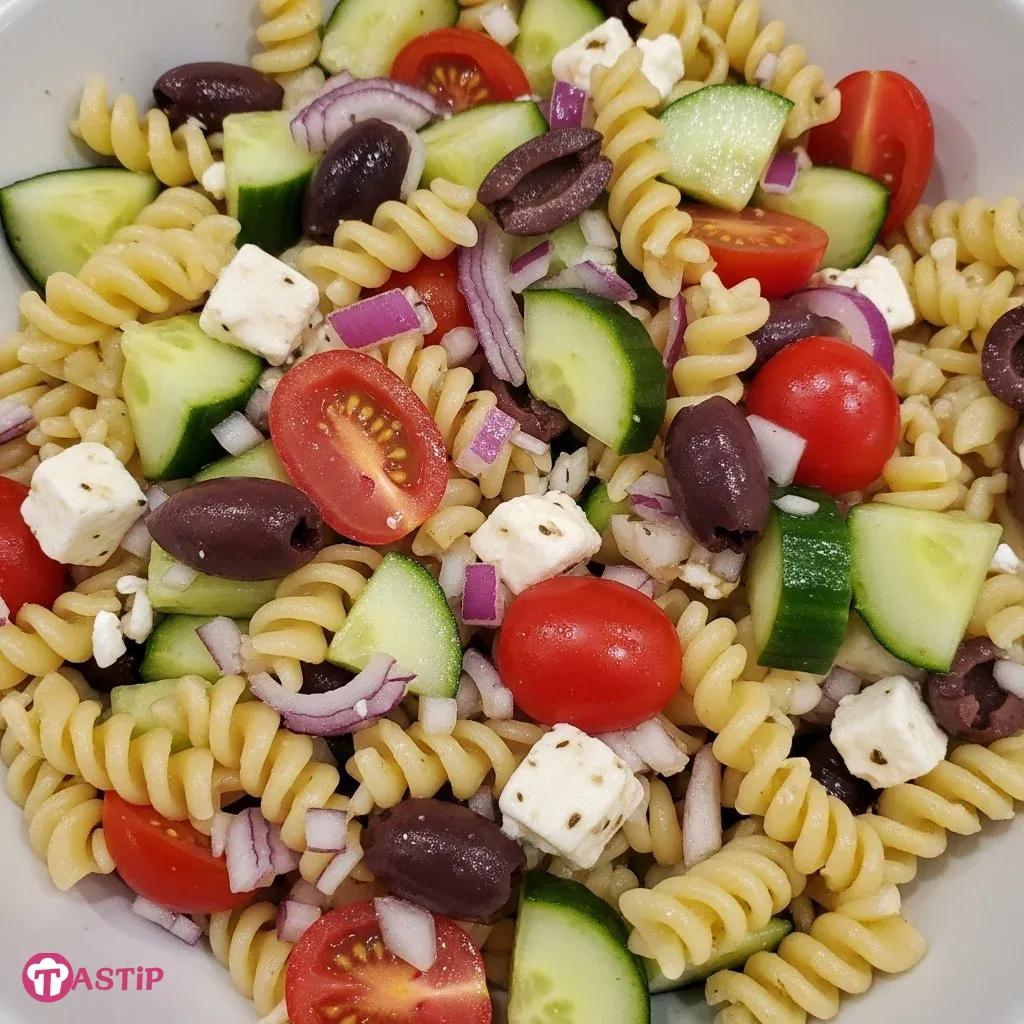
A well-executed Greek Pasta Salad offers a masterclass in the balance of salt, acid, and texture. This dish combines the chewy resistance of al dente pasta with the briny punch of Kalamata olives and the creamy tang of high-quality feta cheese. From a culinary science perspective, the success of this salad relies on the proper emulsification of the dressing and the osmotic interaction between the vegetables and the vinaigrette.
Most home cooks treat this as a simple toss-and-serve meal, but understanding the interaction of ingredients elevates it to a gourmet experience. This Greek Pasta Salad serves as a refreshing side dish or a robust main course that holds up beautifully during meal prep.
By focusing on ingredient integrity and temperature control, you can create a vibrant, Mediterranean-inspired feast. The bright flavors of oregano and lemon juice cut through the richness of the olive oil, ensuring every bite remains crisp and invigorating.
Why You’ll Love This Recipe
- Textural Complexity: This Greek Pasta Salad provides a satisfying contrast between crunchy cucumbers, tender pasta, and creamy feta.
- Superior Nutrient Density: We pack this recipe with antioxidants from fresh vegetables and heart-healthy monounsaturated fats from extra virgin olive oil.
- Perfect for Meal Prep: Unlike leafy greens, the components of this Greek Pasta Salad actually improve in flavor after marinating in the refrigerator for twenty-four hours.
- High Palatability: The aggressive seasoning and high acidity levels stimulate the appetite and keep the palate engaged without feeling heavy.
Ingredients You’ll Need
Quality is paramount when making a Greek Pasta Salad. Because we are not cooking the vegetables or the dressing, every ingredient must be at its peak. I recommend sourcing a block of feta in brine rather than pre-crumbled varieties to maintain moisture and a better fat-to-protein ratio. Use a high-quality, cold-pressed extra virgin olive oil to ensure a peppery finish that complements the dried herbs.
| Category | Ingredient | Quantity |
|---|---|---|
| Pasta Base | Dried Rotini or Fusilli (Semolina) | 16 oz (1 lb) |
| Fresh Produce | English Cucumber (diced) | 1 large |
| Fresh Produce | Cherry Tomatoes (halved) | 2 cups |
| Fresh Produce | Red Onion (finely minced) | 1/2 medium |
| The Brine | Kalamata Olives (pitted and sliced) | 1 cup |
| The Dairy | Sheep’s Milk Feta (cubed or crumbled) | 8 oz |
| Dressing Base | Extra Virgin Olive Oil | 1/2 cup |
| Dressing Acid | Red Wine Vinegar | 1/4 cup |
| Dressing Aromatics | Fresh Garlic (grated) | 2 cloves |
| Dressing Herbs | Dried Oregano | 2 tsp |
| Seasoning | Kosher Salt and Cracked Black Pepper | To taste |
Substitutions & Variations
Note: This video is for demonstration purposes and may use a slightly different method.

While the classic Greek Pasta Salad is iconic, you can adapt the recipe to meet specific dietary needs without sacrificing the structural integrity of the dish. Modern food science has provided us with several excellent alternatives that behave similarly to traditional wheat pasta. If you want to increase the fiber content or make this dish gluten-free, consider the following technical swaps.
- Protein-Rich Swap: Use chickpea-based or lentil-based pasta to increase the protein content of your Greek Pasta Salad while maintaining an al dente structure.
- Vegan Modification: Replace the feta with marinated extra-firm tofu cubes or a commercially available vegan almond-based feta alternative.
- Acid Variation: If red wine vinegar is too sharp for your palate, utilize fresh lemon juice or white balsamic vinegar for a softer, sweeter acidity profile.
- Low-Carb Alternative: For those monitoring glucose levels, replace half of the pasta with blanched cauliflower florets to maintain volume while reducing the glycemic load.
- Herbaceous Twist: Add fresh dill or flat-leaf parsley just before serving to introduce volatile aromatic compounds that dried oregano lacks.
While the classic Greek Pasta Salad is iconic, you can adapt the recipe to meet specific dietary needs without sacrificing the structural integrity of the dish. For a protein-rich alternative, consider trying our Greek Yogurt Chicken Salad.
Step-by-Step Instructions
The secret to a professional-grade Greek Pasta Salad lies in the timing of the assembly. We want the pasta to absorb the dressing without becoming mushy. Follow these steps precisely to ensure the perfect molecular bond between the starch and the vinaigrette.
- Boil the Pasta: Bring a large pot of water to a rolling boil. Add enough salt so the water tastes like the sea; this is your only chance to season the interior of the pasta. Cook the rotini for exactly one minute less than the package directions for “al dente.” The pasta will continue to soften slightly as it absorbs the dressing for the Greek Pasta Salad.
- Drain and Cool: Drain the pasta and rinse it briefly under cool water. This stops the cooking process and removes excess surface starch, preventing the Greek Pasta Salad from becoming gummy. Shake off as much water as possible.
- Prepare the Vinaigrette: In a glass jar or small bowl, whisk together the olive oil, red wine vinegar, grated garlic, dried oregano, salt, and pepper. Use a vigorous motion to create a temporary emulsion. This ensures the oil and vinegar coat the ingredients evenly rather than separating.
- Chop the Vegetables: While the pasta cools further, dice your cucumbers, tomatoes, and onions. I prefer a uniform dice for the Greek Pasta Salad so that every forkful contains a representative sample of all ingredients.
- Combine While Warm: Place the slightly warm pasta in a large mixing bowl. Pour half of the dressing over it and toss. The warmth of the pasta causes the starch molecules to expand, allowing the dressing to penetrate deeper into the noodle.
- Final Assembly: Add the cucumbers, tomatoes, onions, olives, and feta cheese to the bowl. Pour the remaining dressing over the mixture. Fold gently with a large spatula to avoid breaking the delicate cubes of feta.
- The Chill Factor: Cover the Greek Pasta Salad and refrigerate for at least thirty minutes. This allows the flavors to meld through a process of molecular diffusion, resulting in a more cohesive taste profile.
Pro Tips for Success
In the test kitchen, we focus on the “why” behind every movement. To make the ultimate Greek Pasta Salad, you must respect the science of hydration and seasoning. First, always salt your pasta water aggressively.
Since the pasta is served cold, the taste buds are less sensitive to salt; therefore, internal seasoning is critical. Second, do not overcook the pasta. Cold starch behaves differently than hot starch; overcooked noodles will lose their structural integrity and turn into a paste when mixed with acidic dressing.
Another professional secret for a superior Greek Pasta Salad involves the red onions. If you find raw onions too pungent, soak the minced pieces in cold water for ten minutes before adding them to the salad. This leaches out the sulfurous compounds that cause a harsh aftertaste.
Furthermore, use English or Persian cucumbers. These varieties have thinner skins and smaller seeds, which prevents the Greek Pasta Salad from becoming overly watery as it sits. Finally, always toss the salad once more right before serving. The dressing tends to settle at the bottom of the bowl due to gravity, and a quick toss redistributes those essential fats and acids.
To make the ultimate Greek Pasta Salad, you must respect the science of hydration and seasoning. For a nutritious twist, check out our recipe for Greek Yogurt Pumpkin Muffins.
Storage & Reheating Tips
Because this is a cold dish, reheating is unnecessary and discouraged. The Greek Pasta Salad stores exceptionally well in the refrigerator for up to four days. In fact, many people find that the salad tastes significantly better on day two.
This happens because the acids in the vinegar slowly break down the cell walls of the vegetables, allowing the flavors to permeate the entire dish. To store, place the salad in an airtight glass container to prevent any odors from the fridge from affecting the delicate olive oil.
If the Greek Pasta Salad appears a bit dry after twenty-four hours, it is likely because the pasta has fully absorbed the oil. Simply add a teaspoon of olive oil and a squeeze of fresh lemon juice to revive the sheen and the zing. Do not freeze this recipe.
The freezing and thawing process would destroy the cellular structure of the fresh tomatoes and cucumbers, resulting in a soggy, unappetizing mess. If you are serving this at a picnic, keep the bowl nestled in a larger bowl of ice to maintain a food-safe temperature and keep the textures crisp.
What to Serve With This Recipe
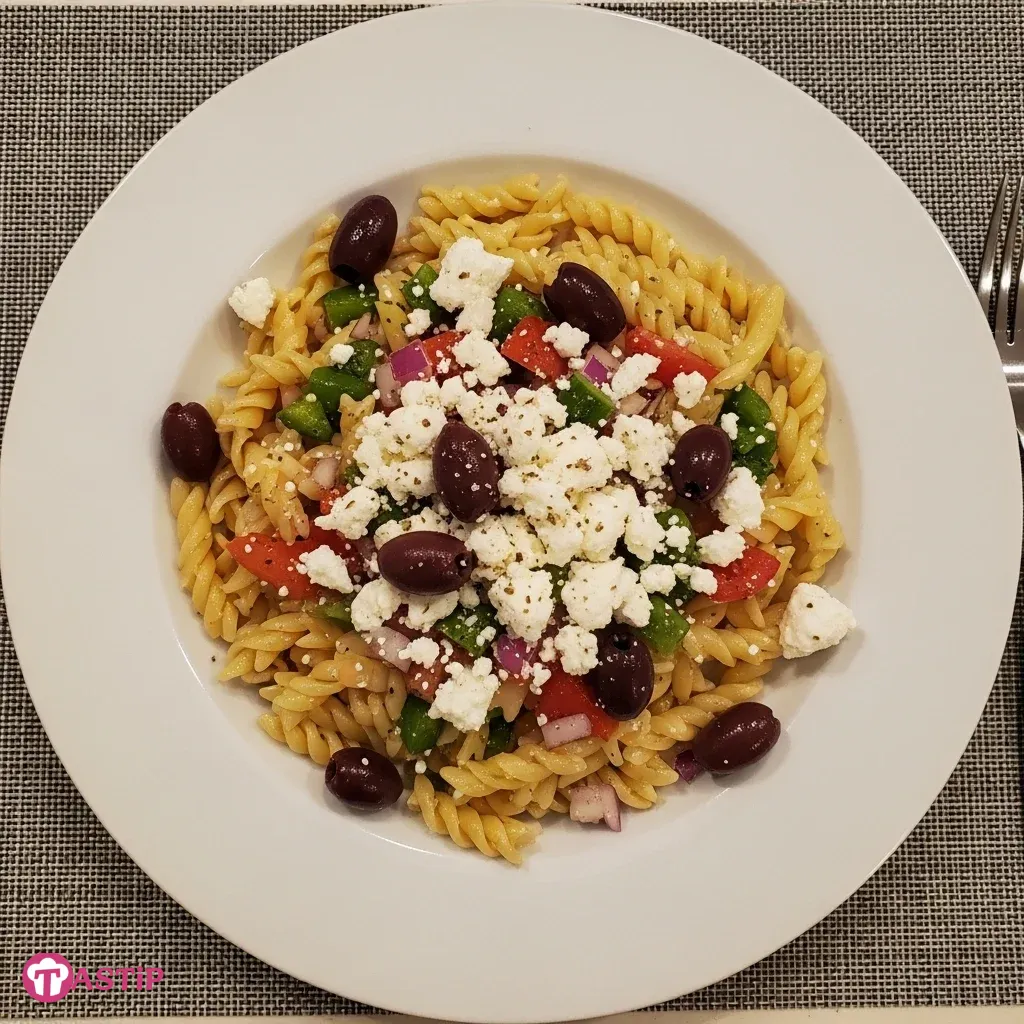
This Greek Pasta Salad is a versatile powerhouse that pairs beautifully with a variety of Mediterranean-inspired proteins. Since the salad provides plenty of complex carbohydrates and healthy fats, look for lean proteins to round out the meal. The acidity of the salad acts as a perfect palate cleanser for richer, grilled meats.
- Lemon Herb Grilled Chicken: The citrus notes in the chicken mirror the acidity in the Greek Pasta Salad dressing.
- Roasted Chickpeas: For a vegetarian option, seasoned roasted chickpeas provide a crunchy textural contrast.
- Grilled Lamb Sliders: The gaminess of lamb is traditionally paired with feta and oregano, making it a natural companion.
- Garlic Butter Shrimp: Quick-seared shrimp adds a delicate sweetness that balances the briny olives.
- Roasted Zucchini and Eggplant: If you want to keep the meal entirely plant-based, a platter of roasted Mediterranean vegetables provides a warm, savory element.
This Greek Pasta Salad is a versatile powerhouse that pairs beautifully with a variety of Mediterranean-inspired proteins. To complement the salad, try our Chicken Breast with Zucchini and Squash for a well-rounded meal.
FAQs
Can I make Greek Pasta Salad ahead of time?
Yes, this is one of the few salads that actually benefits from being made in advance. Preparing the Greek Pasta Salad 4 to 12 hours before serving allows the pasta to absorb the aromatics from the garlic and oregano. Just be sure to give it a good toss before serving to redistribute the dressing.
What is the best pasta shape for this recipe?
Short, textured shapes are the gold standard for Greek Pasta Salad. Rotini, fusilli, and cavatappi are excellent choices because their spirals and ridges trap the dressing and small bits of feta. Avoid long strands like spaghetti, as they are difficult to eat when mixed with chunky vegetables.
Why does my pasta salad get dry in the fridge?
Pasta is essentially a sponge made of starch. Even after it is cooked, it continues to hydrate. In a Greek Pasta Salad, the noodles will pull the liquid from the dressing into their core. To fix this, simply add a small splash of olive oil or water before serving to restore the desired moisture level.
Greek Pasta Salad is a delightful dish that showcases the vibrant flavors of Mediterranean cuisine. It often features a combination of fresh vegetables, pasta, and a zingy dressing that brings the ingredients together, making it a popular choice for gatherings and meal prep. Learn more about this beloved dish here.
Nutrition Information (per serving)
The following nutritional profile is based on a standard serving size of approximately 1.5 cups of Greek Pasta Salad. This recipe offers a balanced distribution of macronutrients, making it a satiating choice for a healthy lifestyle.
| Nutrient | Amount |
|---|---|
| Calories | 380 kcal |
| Total Fat | 18g |
| Saturated Fat | 5g |
| Cholesterol | 15mg |
| Sodium | 520mg |
| Total Carbohydrates | 42g |
| Dietary Fiber | 4g |
| Sugars | 3g |
| Protein | 10g |
Greek Pasta Salad
- Total Time: 40 mins
- Yield: 4 servings 1x
- Diet: Vegetarian
Description
A well-executed Greek Pasta Salad offers a masterclass in the balance of salt, acid, and texture. This dish combines chewy al dente pasta with the briny punch of Kalamata olives and the creamy tang of high-quality feta cheese. It serves as a refreshing side dish or a robust main course.
Ingredients
16 oz Dried Rotini or Fusilli
1 large English Cucumber (diced)
2 cups Cherry Tomatoes (halved)
1/2 medium Red Onion (finely minced)
1 cup Kalamata Olives (pitted and sliced)
8 oz Sheep’s Milk Feta (cubed or crumbled)
1/2 cup Extra Virgin Olive Oil
1/4 cup Red Wine Vinegar
2 cloves Fresh Garlic (grated)
2 tsp Dried Oregano
Kosher Salt and Cracked Black Pepper (to taste)
Instructions
- Boil the pasta according to package directions, cooking it one minute less for al dente
- Drain and rinse the pasta under cool water to stop the cooking process
- Prepare the vinaigrette by whisking together olive oil, red wine vinegar, garlic, oregano, salt, and pepper
- Dice the cucumbers, tomatoes, and onions uniformly
- Combine the warm pasta with half of the dressing, then add vegetables, olives, and feta, pouring the remaining dressing over
- Refrigerate the mixture for at least 30 minutes before serving
Notes
Soak minced onions in cold water for 10 minutes to reduce pungency.
Use English or Persian cucumbers for less water and better texture.
- Prep Time: 30 mins
- Cook Time: 10 mins
- Category: Salad
- Method: Mixing
- Cuisine: Greek
Nutrition
- Serving Size: 1.5 cups
- Calories: 380 kcal
- Sugar: 3g
- Sodium: 520mg
- Fat: 18g
- Saturated Fat: 5g
- Unsaturated Fat: 13g
- Trans Fat: 0g
- Carbohydrates: 42g
- Fiber: 4g
- Protein: 10g
- Cholesterol: 15mg