
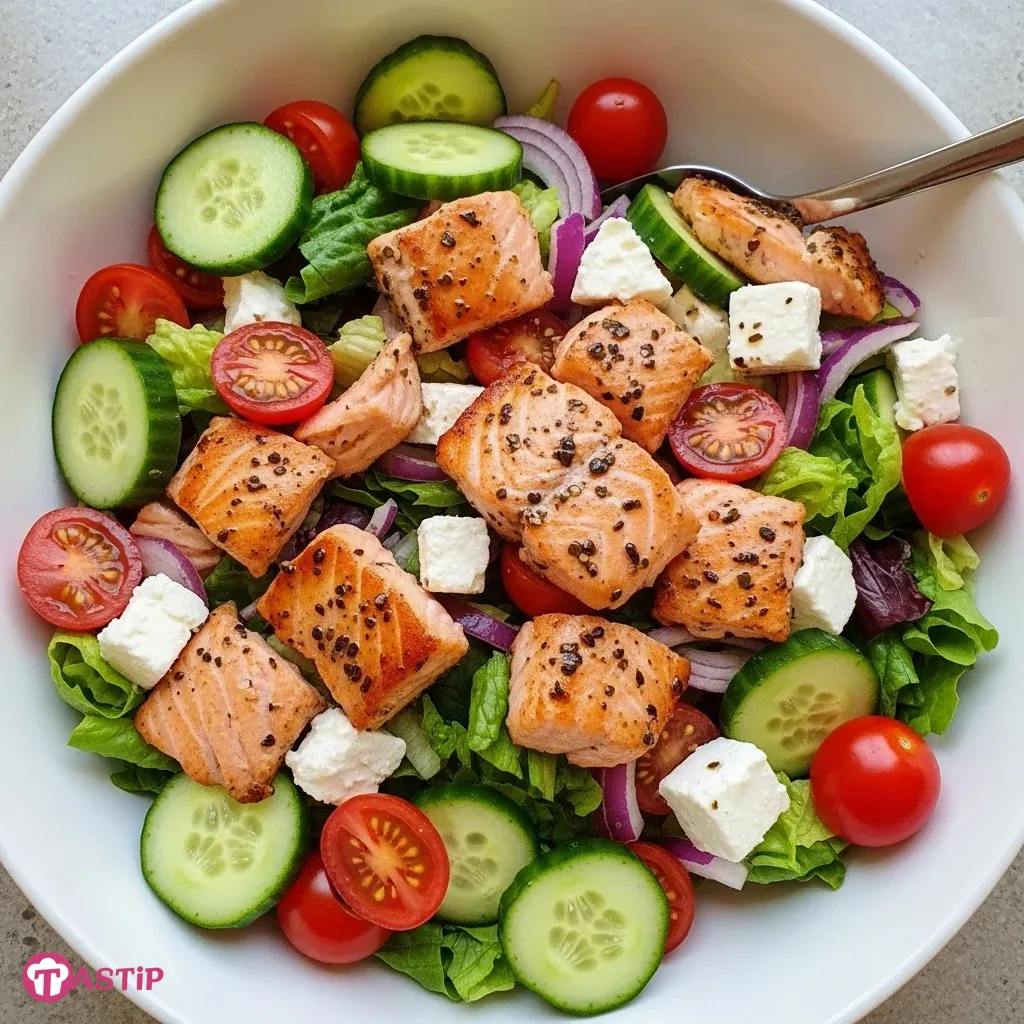
The Salmon Greek Salad combines the richness of omega-3 fatty acids with the vibrant, acidic crunch of Mediterranean vegetables. You will find that the contrast between the warm, seared protein and the chilled, crisp cucumbers creates a sensory experience that standard salads lack. As a former test kitchen chef, I prioritize the chemical interaction between salt and muscle fibers to ensure your fish remains moist and flavorful.
This dish relies on the delicate balance of fats and acids to stimulate every part of your palate. You can easily master this restaurant-quality meal at home once you understand the physics of a perfect sear. This Salmon Greek Salad represents the pinnacle of nutritious, functional, and flavorful cooking.
Why You’ll Love This Recipe
- The Salmon Greek Salad features a perfect Maillard reaction on the fish, providing a savory crust that complements the tangy feta cheese.
- This recipe utilizes high-quality fats from extra virgin olive oil and salmon, which facilitate the absorption of fat-soluble vitamins found in the fresh vegetables.
- You can prepare the entire Salmon Greek Salad in under 30 minutes, making it an ideal solution for busy weeknights without sacrificing nutritional integrity.
- The combination of fiber-rich vegetables and high-quality protein ensures long-lasting satiety and stable blood sugar levels.
Ingredients You’ll Need
To create a truly exceptional Salmon Greek Salad, ingredient quality is paramount. When you choose your salmon, look for wild-caught varieties like Sockeye or King salmon. These fish possess a more robust flavor profile and a firmer muscular structure compared to farmed alternatives.
The acidity in the dressing requires a high-quality vinegar to avoid a metallic aftertaste, so I recommend an aged red wine vinegar. For the vegetables, focus on water content and turgidity; a crisp cucumber is the backbone of the salad’s texture.
| Category | Ingredient | Function in Recipe |
|---|---|---|
| Protein | 2 Fresh Salmon Fillets (6oz each) | Provides the savory base and healthy fats for the Salmon Greek Salad. |
| Produce | 1 English Cucumber | Adds crunch and hydration through its high water content. |
| Produce | 2 cups Cherry Tomatoes | Provides sweetness and acidity (lycopene). |
| Produce | 1/2 Red Onion | Delivers a sharp, pungent bite and antioxidants. |
| Dairy | 4 oz Block Feta Cheese | Adds creamy texture and salty, fermented depth. |
| Pantry | Kalamata Olives | Introduces umami and healthy monounsaturated fats. |
| Dressing | Extra Virgin Olive Oil & Lemon | Acts as the emulsified bridge between all components. |
| Herb | Fresh Oregano and Dill | Provides aromatic complexity and volatile oils. |
Substitutions & Variations
Note: This video is for demonstration purposes and may use a slightly different method.

While the classic Salmon Greek Salad is nearly perfect, you can adapt it to suit your specific dietary needs or pantry availability. If you want to increase the fiber content further, consider adding half a cup of rinsed chickpeas. This addition introduces plant-based protein and a pleasant, starchy texture.
For those who find raw red onions too aggressive, you can soak the slices in ice water for ten minutes. This process leaches out the sulfurous compounds, leaving a milder flavor that won’t overpower the delicate fish.
If you prefer a different protein, you can substitute the salmon with grilled shrimp or even seared tofu. However, the unique fat profile of the Salmon Greek Salad is what makes it scientifically superior for nutrient absorption. If feta cheese does not agree with you, try using a dollop of thick Greek yogurt seasoned with lemon zest and salt.
This provides the necessary creaminess and probiotics while keeping the Mediterranean theme intact. Always ensure your substitutions maintain the balance of salt, fat, and acid to keep the dish harmonious.
If you’re looking to enhance your Salmon Greek Salad, consider the sweetness of Honey Garlic Salmon for an unexpected twist. You can find our recipe here.
Step-by-Step Instructions
- Prep the Protein: Remove the salmon fillets from the refrigerator 15 minutes before cooking. This allows the internal temperature to rise slightly, ensuring more even heat distribution. Pat the skin extremely dry with paper towels. Moisture is the enemy of the Maillard reaction; any surface water will turn to steam and prevent the skin from becoming crispy.
- Seasoning: Generously season the salmon with kosher salt and freshly cracked black pepper. Salt acts as a denaturant, beginning to break down the protein structures on the surface which helps in forming a beautiful crust. Do this just before the fish hits the pan to avoid drawing out too much internal moisture.
- The Sear: Heat a stainless steel or cast-iron skillet over medium-high heat. Add a high-smoke-point oil. Once the oil shimmers, place the salmon skin-side down. Press down firmly with a spatula for 30 seconds to prevent the protein from curling. Cook for 4-5 minutes until the skin is golden and releases easily from the pan.
- The Flip: Flip the salmon gently and cook for another 2-3 minutes. For the best Salmon Greek Salad, you want the center to remain slightly translucent (medium-rare to medium). This preserves the delicate omega-3 oils and prevents the “white stuff” (albumin) from leaching out. Remove from heat and let it rest.
- Assemble the Base: While the fish rests, chop the cucumbers, tomatoes, and onions. Combine them in a large bowl with the olives. Whisk together the olive oil, lemon juice, dried oregano, and salt to create a temporary emulsion.
- Toss and Serve: Pour the dressing over the vegetables and toss gently. Crumble the feta over the top. Finally, place the warm salmon fillet directly on top of the greens. The residual heat from the fish will slightly soften the feta, creating a luxurious mouthfeel for your Salmon Greek Salad.
Pro Tips for Success
Achieving the perfect Salmon Greek Salad requires attention to thermal dynamics and chemical balance. One of the most common mistakes is overcooking the salmon. Fish proteins are much more sensitive to heat than beef or poultry.
Once the internal temperature reaches 125°F (52°C), remove it from the pan. Carryover cooking will bring it to a perfect 130°F. If you see white bubbles appearing on the surface of the fish, you have pushed the heat too far, causing the muscle fibers to contract and squeeze out the albumin.
Furthermore, consider the science of your dressing. Emulsification is the process of forcing oil and vinegar to stay mixed. In this Salmon Greek Salad, the dry oregano and mustard (if you choose to add a pinch) act as stabilizers.
When you whisk vigorously, you break the oil into tiny droplets that are suspended in the acid. This ensures that every bite of your Salmon Greek Salad has a consistent flavor profile, rather than some bites being oily and others being overly tart. Always dress the salad immediately before serving to prevent the salt in the dressing from drawing water out of the cucumbers, which leads to sogginess.
To ensure your salmon is perfectly cooked, check out our tips for Baked Lemon Garlic Salmon. This method guarantees a tender, flavorful fillet that complements your salad beautifully; see the recipe here.
Storage & Reheating Tips
The Salmon Greek Salad is best enjoyed immediately after preparation. However, if you have leftovers, store the salmon and the vegetable components in separate airtight containers. The acids in the dressing will break down the cell walls of the vegetables over time, resulting in a loss of turgidity and crunch. If stored separately, the vegetables will stay fresh for up to 24 hours.
When reheating the salmon, avoid the microwave at all costs. The microwave vibrates water molecules rapidly, which often results in a rubbery texture and a “fishy” aroma. Instead, place the salmon in a 300°F oven for 5-8 minutes until just warmed through.
Alternatively, eat the leftover salmon cold; it remains delicious and the fats become more solidified, offering a different but pleasant texture. Simply flake the cold fish over a fresh bed of vegetables for a quick, revamped Salmon Greek Salad the next day.
What to Serve With This Recipe
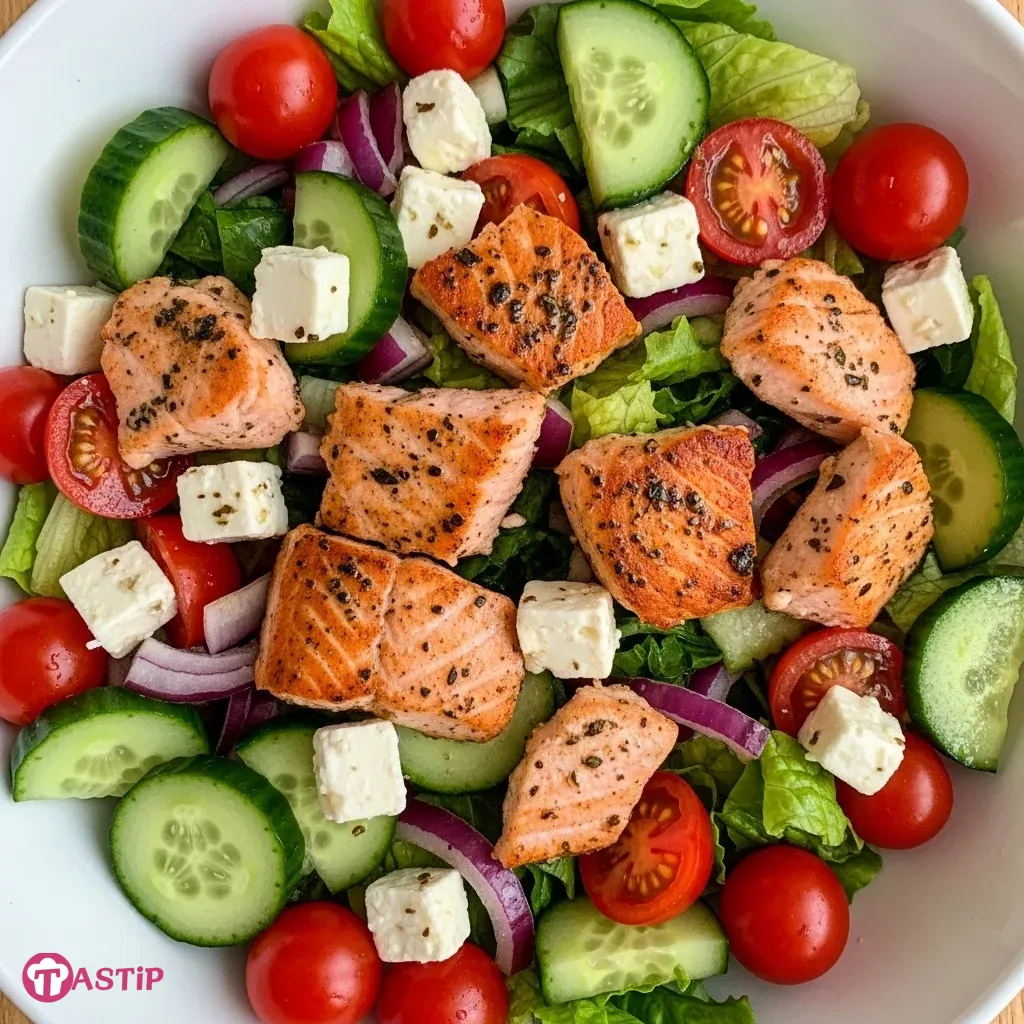
While the Salmon Greek Salad is a complete meal on its own, you can elevate the experience with strategic pairings. A side of warm, toasted pita bread with a high-quality hummus provides the necessary complex carbohydrates to fuel your brain. The creaminess of the chickpeas complements the sharpness of the feta and the red wine vinegar dressing. If you want to keep the meal low-carb, consider serving it alongside roasted asparagus seasoned with lemon zest and garlic.
For a truly cohesive Mediterranean feast, start with a small bowl of roasted red pepper soup. The sweetness of the peppers acts as a precursor to the savory and salty notes of the Salmon Greek Salad.
If you are serving guests, a crisp glass of Sauvignon Blanc or a dry Assyrtiko from Greece provides a high-acidity beverage pairing that cuts through the richness of the salmon. These additions round out the nutritional profile and turn a simple salad into a sophisticated dining event.
For a low-carb option, you might enjoy pairing your Salmon Greek Salad with Low-Carb Grilled Salmon, which adds a delightful flavor while keeping it healthy. Discover this recipe here.
FAQs
Can I use frozen salmon for this recipe?
Yes, you can use frozen salmon for your Salmon Greek Salad, provided you thaw it correctly. The best method is to thaw it overnight in the refrigerator. If you are in a rush, place the sealed fish in a bowl of cold water.
Never use warm water, as this can start the cooking process on the edges and promote bacterial growth. Ensure you pat the thawed fish completely dry before searing to achieve that essential crispy skin.
Is it better to leave the skin on or off?
I highly recommend leaving the skin on while cooking the salmon for your Salmon Greek Salad. The skin acts as a protective barrier between the delicate flesh and the intense heat of the pan, helping to keep the fish moist. Furthermore, the layer of fat between the skin and the meat is where many of the omega-3s are concentrated. Once the skin is rendered and crispy, it provides a wonderful textural contrast to the soft vegetables.
How can I make the dressing less tart?
If the dressing for your Salmon Greek Salad feels too acidic, you can balance it by adding a small amount of honey or maple syrup. Chemically, sugar suppresses our perception of sourness. Alternatively, you can increase the ratio of olive oil to vinegar. A standard vinaigrette is three parts oil to one part acid, but you can move to a four-to-one ratio if you prefer a smoother, richer finish that highlights the fruity notes of the oil.
The Salmon Greek Salad is a vibrant dish that showcases the nutritional benefits of fresh ingredients and the richness of salmon. By understanding the importance of flavor balance and high-quality components, this meal becomes a delightful representation of Mediterranean cuisine; learn more about its benefits in this article.
Nutrition Information (per serving)
The Salmon Greek Salad is a nutritional powerhouse, offering a balance of high-quality proteins, healthy fats, and essential micronutrients. Below is the macro breakdown for a standard serving size.
| Nutrient | Amount |
|---|---|
| Calories | 480 kcal |
| Total Fat | 32g |
| Saturated Fat | 7g |
| Protein | 38g |
| Total Carbohydrates | 12g |
| Dietary Fiber | 4g |
| Sodium | 650mg |
Salmon Greek Salad
- Total Time: 30 mins
- Yield: 4 servings 1x
- Diet: Gluten Free
Description
The Salmon Greek Salad combines the richness of omega-3 fatty acids with vibrant Mediterranean vegetables, delivering a balanced meal with moisture and flavor from perfectly seared salmon and fresh, crunchy components.
Ingredients
2 Fresh Salmon Fillets (6oz each)
1 English Cucumber
2 cups Cherry Tomatoes
1/2 Red Onio
4 oz Block Feta Cheese
Kalamata Olives
3 tbsp Extra Virgin Olive Oil
1 Lemo
1 tbsp Fresh Oregano
1 tbsp Fresh Dill
Instructions
- Remove the salmon fillets from the refrigerator 15 minutes before cooking
- Pat the skin extremely dry with paper towels and season with kosher salt and black pepper
- Heat a skillet over medium-high heat with high-smoke-point oil
- Cook salmon skin-side down for 4-5 minutes until golden, then flip and cook for 2-3 minutes until medium-rare
- Chop cucumbers, tomatoes, and onions, and combine with olives in a bowl
- Whisk together olive oil, lemon juice, oregano, and salt
- Pour dressing over the vegetables, toss, crumble feta, and top with warm salmo
Notes
You can soak red onion in ice water for a milder flavor.
Store salmon and vegetables in separate containers to maintain freshness.
- Prep Time: 20 mins
- Cook Time: 10 mins
- Category: Dinner
- Method: Searing
- Cuisine: Mediterranean
Nutrition
- Serving Size: 1 bowl
- Calories: 480 kcal
- Sugar: 5g
- Sodium: 650mg
- Fat: 32g
- Saturated Fat: 7g
- Unsaturated Fat: 23g
- Trans Fat: 0g
- Carbohydrates: 12g
- Fiber: 4g
- Protein: 38g
- Cholesterol: 75mg