
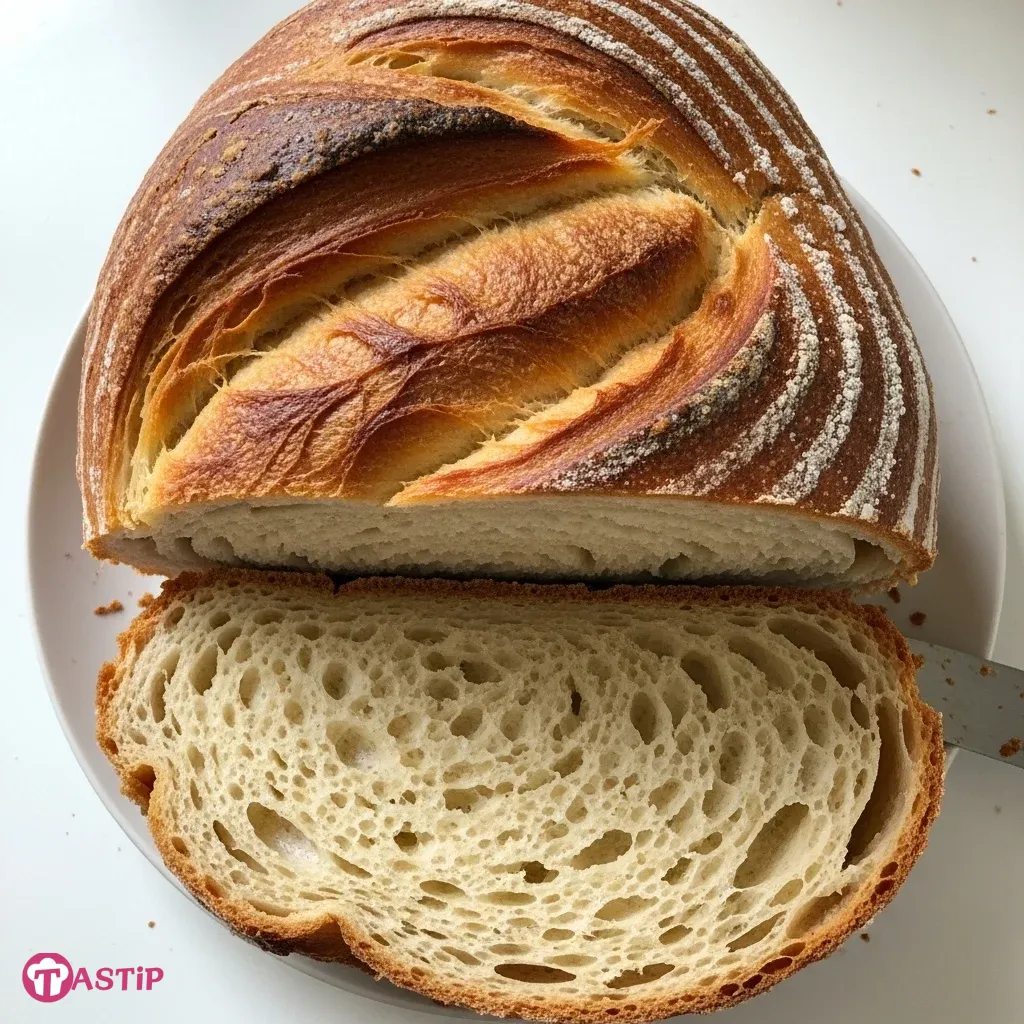
The Sourdough Croissant Loaf represents the pinnacle of home baking, merging the complex acidity of wild yeast with the decadent, buttery layers of a classic pastry. This loaf offers a shatteringly crisp exterior that yields to a soft, airy, and distinctly honeycomb-like crumb. Unlike standard sandwich bread, the Sourdough Croissant Loaf utilizes a technical lamination process to create hundreds of microscopic layers of dough and fat.
I have spent years in test kitchens refining this technique to ensure your results are consistent and professional. You will appreciate how the natural fermentation enhances the flour’s flavor while improving the bread’s overall digestibility. This recipe transforms simple ingredients into a structural masterpiece that serves as the ultimate vessel for both sweet and savory toppings.
Why You’ll Love This Sourdough Croissant Loaf
- Unmatched Texture: The Sourdough Croissant Loaf features a unique architectural crumb that provides a satisfying crunch and a melt-in-your-mouth interior.
- Enhanced Flavor Profile: Long fermentation develops organic acids that provide a sophisticated tang, which balances the richness of the high-fat European butter.
- Better Digestion: Using a wild yeast starter breaks down gluten and phytic acid, making this Sourdough Croissant Loaf gentler on your metabolic system than commercial yeast breads.
Ingredients You’ll Need
To achieve the perfect Sourdough Croissant Loaf, you must prioritize ingredient quality. The protein content of your flour and the fat percentage of your butter determine the success of the lamination process. I recommend using a high-protein bread flour to support the heavy butter layers and ensure the loaf maintains its height during the final proof.
| Ingredient | Quantity | Purpose |
|---|---|---|
| Active Sourdough Starter | 150g | Provides leavening and the signature sourdough tang. |
| Bread Flour (12.5% Protein) | 500g | Creates the gluten structure needed for lamination. |
| Whole Milk (Cold) | 250g | Adds tenderness to the crumb and aids in browning. |
| Granulated Sugar | 50g | Feeds the yeast and enhances the Maillard reaction. |
| Sea Salt | 10g | Tightens the gluten network and highlights flavor. |
| Unsalted European Butter | 250g | The “beurrage” used for creating thin, flaky layers. |
| Unsalted Butter (Softened) | 40g | Incorporated into the initial dough for elasticity. |
Substitutions & Variations
Note: This video is for demonstration purposes and may use a slightly different method.

While the classic Sourdough Croissant Loaf is a marvel on its own, you can experiment with healthier or dietary-specific swaps. However, remember that fat content is crucial for the lamination science. If you wish to increase the nutrient density, substitute 10% of the bread flour with sprouted spelt flour.
This adds a nutty depth without compromising the structural integrity of the Sourdough Croissant Loaf. For a lower-sugar version, you can reduce the granulated sugar to 25g, though the crust may appear slightly paler.
If you are sensitive to cow’s milk, a full-fat oat milk works surprisingly well due to its high starch content, which mimics the mouthfeel of dairy. I do not recommend substituting the butter with margarine or coconut oil, as their melting points vary significantly, which often leads to “leaking” during the baking phase.
While enhancing the Sourdough Croissant Loaf is an exciting endeavor, it’s worth exploring other delicious options like Flavored Sourdough Bread. This recipe allows for creative variations that can elevate your baking experience.
Step-by-Step Instructions
Mastering the Sourdough Croissant Loaf requires patience and precision. We focus on temperature control to ensure the butter remains pliable but does not melt into the dough. This physical separation of dough and fat is what creates the “lift” as water evaporates in the oven.
- Prepare the Détrempe: In a large mixing bowl, combine the active sourdough starter, cold milk, sugar, and sea salt. Gradually add the bread flour and the 40g of softened butter. Mix until a shaggy dough forms. Knead for about 5-8 minutes until the dough is smooth and semi-elastic. Do not over-knead, as the lamination process will further develop the gluten. Wrap the dough and refrigerate for 4 hours or overnight.
- Create the Butter Block: Place the 250g of cold European butter between two sheets of parchment paper. Use a rolling pin to pound the butter into an even 7×7-inch square. Ensure the butter remains cool but flexible. This is the “beurrage” for your Sourdough Croissant Loaf.
- The Lock-In: Roll your chilled dough into a 10×10-inch square. Place the butter block diagonally in the center. Fold the corners of the dough over the butter, meeting in the middle like an envelope. Seal the seams tightly.
- First Turn (Single Turn): Gently roll the dough into a long rectangle, roughly 18 inches long. Fold the bottom third up to the center, and the top third down over it, like a letter. This creates your first sets of layers. Chill for 45 minutes to relax the gluten.
- Second Turn (Double Turn): Rotate the dough 90 degrees. Roll it out again into a long rectangle. Fold both ends toward the center, then fold the entire piece in half like a book. This significantly increases the layer count in your Sourdough Croissant Loaf. Chill for another 45 minutes.
- Shaping: Roll the final dough into a rectangle that matches the length of your loaf pan. Roll the dough up tightly into a cylinder. Place it into a greased 9×5-inch loaf pan.
- The Final Proof: This is the most critical stage for a Sourdough Croissant Loaf. Cover the pan and let it rise in a cool area (70-75°F) for 6 to 10 hours. The dough should double in size and feel extremely wobbly when shaken.
- Baking: Preheat your oven to 400°F (200°C). Brush the top of the Sourdough Croissant Loaf with an egg wash. Bake for 15 minutes, then reduce the temperature to 350°F (175°C) and bake for another 25-30 minutes until the internal temperature reaches 200°F.
- Cooling: Allow the loaf to cool in the pan for 10 minutes before transferring it to a wire rack. You must let the Sourdough Croissant Loaf cool completely for at least 2 hours to set the internal structure.
Pro Tips for Success
To achieve professional results with your Sourdough Croissant Loaf, you must respect the thermodynamics of baking. If the dough becomes too warm, the butter will melt into the flour, resulting in a brioche-like texture rather than distinct layers. Always chill your rolling pin if your kitchen is warm.
Furthermore, use a kitchen scale for all measurements. Volume measurements for flour are notoriously inaccurate and can ruin the hydration balance. Finally, ensure your sourdough starter is at its peak activity. A sluggish starter will not provide enough carbon dioxide to lift the heavy, butter-laden layers of the Sourdough Croissant Loaf, leading to a dense and gummy center.
To achieve the best results with your Sourdough Croissant Loaf, mastering precise techniques is essential, and you might want to check out Sourdough Score Ideas for some valuable scoring techniques. These insights will ensure your loaves turn out beautifully.
Storage & Reheating Tips
The high fat content in a Sourdough Croissant Loaf helps it stay fresh longer than standard bread. Store the loaf at room temperature in a paper bag for up to 48 hours. For longer storage, slice the Sourdough Croissant Loaf and freeze the slices in an airtight container for up to three months.
To enjoy, avoid using the microwave, as it will make the crust soggy. Instead, reheat slices in a toaster oven at 325°F for 5 minutes. This restores the crispness of the exterior and softens the butter within the crumb, making it taste freshly baked.
What to Serve With This Recipe
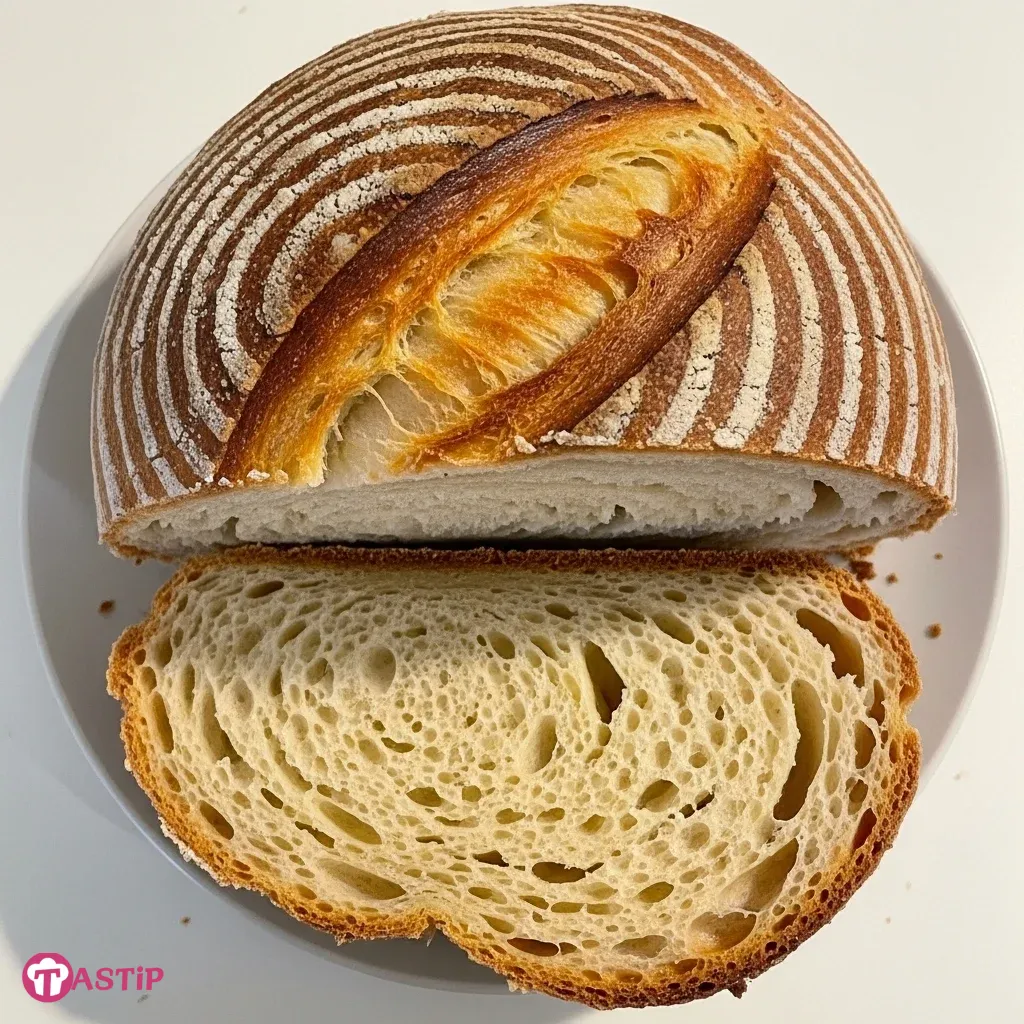
The Sourdough Croissant Loaf is incredibly versatile. For a balanced breakfast, serve a toasted slice alongside a soft-boiled egg and a handful of fresh arugula. The acidity of the greens cuts through the richness of the bread.
For a healthy lunch, use the Sourdough Croissant Loaf as a base for an open-faced sandwich topped with smashed avocado, heirloom tomatoes, and a sprinkle of hemp seeds. If you prefer a savory dinner pairing, a thick slice of this loaf is perfect for mopping up the juices of a roasted vegetable ratatouille or a light lemon-garlic kale salad. The structural integrity of the bread ensures it won’t fall apart when paired with moist ingredients.
The Sourdough Croissant Loaf is incredibly versatile, and you can find inspiration for more delicious variations in our Sourdough Croissant Bread Loaf guide. This will help you explore creative ways to enjoy your loaf for any meal.
FAQs
Can I make this Sourdough Croissant Loaf without a stand mixer?
Yes, you can certainly mix the Sourdough Croissant Loaf by hand. Use a sturdy bowl and a dough whisk to combine the initial ingredients. When kneading, use a gentle “stretch and fold” technique to avoid overheating the dough with your hands. It may take slightly longer to reach the desired elasticity, but the results will be just as delicious.
Why did the butter leak out of my Sourdough Croissant Loaf during baking?
Butter leakage usually occurs if the Sourdough Croissant Loaf was under-proofed or if the oven temperature was too low. If the yeast hasn’t produced enough gas to hold the structure, the heat melts the butter before the dough “sets.” Ensure the loaf has doubled in size and wobbles like jelly before it enters the oven.
Can I use whole wheat flour for this loaf?
I recommend using no more than 20% whole wheat flour in your Sourdough Croissant Loaf. Whole wheat flour contains bran particles that act like tiny knives, cutting through the delicate gluten strands and the thin layers of butter. This can lead to a shorter rise and less flakiness. If you use whole wheat, increase the hydration slightly by adding an extra tablespoon of milk.
The Sourdough Croissant Loaf is a delightful fusion of traditional bread-making and pastry techniques, resulting in a unique loaf rich with flavor and texture. For more information on its fascinating background, explore the topic of bread.
Nutrition Information (per serving)
Each Sourdough Croissant Loaf provides approximately 12 servings. The fermentation process lowers the glycemic index compared to standard white bread.
| Metric | Amount per Serving |
|---|---|
| Calories | 285 kcal |
| Total Fat | 18g |
| Saturated Fat | 11g |
| Carbohydrates | 26g |
| Fiber | 1.5g |
| Protein | 5g |
| Sodium | 310mg |

Sourdough Croissant Loaf
- Total Time: 10 hours
- Yield: 12 servings 1x
- Diet: Vegetarian
Description
The Sourdough Croissant Loaf represents the pinnacle of home baking, merging complex acidity of wild yeast with decadent, buttery layers of a classic pastry. This loaf features a shatteringly crisp exterior that yields to a soft, airy, honeycomb-like crumb. The lamination process creates hundreds of microscopic layers of dough and fat, resulting in unmatched texture and flavor.
Ingredients
150g Active Sourdough Starter
500g Bread Flour (12.5% Protein)
250g Whole Milk (Cold)
50g Granulated Sugar
10g Sea Salt
250g Unsalted European Butter
40g Unsalted Butter (Softened)
Instructions
- Prepare the Détrempe: In a large mixing bowl, combine active sourdough starter, cold milk, sugar, and sea salt. Gradually add bread flour and the 40g of softened butter, mix until a shaggy dough forms. Knead for about 5-8 minutes until the dough is smooth and semi-elastic. Wrap the dough and refrigerate for 4 hours or overnight
- Create the Butter Block: Pound the cold European butter into an even 7×7-inch square using a rolling pin between parchment paper
- The Lock-In: Roll the chilled dough into a 10×10-inch square. Place the butter block diagonally in the center and fold corners of the dough over the butter, sealing tightly
- First Turn (Single Turn): Roll dough into an 18-inch long rectangle, fold bottom third up to center, top third down over it. Chill for 45 minutes
- Second Turn (Double Turn): Rotate dough 90 degrees. Roll out into a long rectangle, fold both ends toward the center, then fold in half. Chill for another 45 minutes
- Shaping: Roll the final dough into a rectangle for the loaf pan. Roll tightly into a cylinder and place in a greased 9×5-inch loaf pa
- The Final Proof: Cover and let rise in a cool area (70-75°F) for 6 to 10 hours until doubled and wobbly
- Baking: Preheat oven to 400°F (200°C), brush with egg wash, bake for 15 minutes, then reduce to 350°F (175°C) and bake for another 25-30 minutes until an internal temperature of 200°F is reached
- Cooling: Allow to cool in the pan for 10 minutes, then transfer to a wire rack and cool completely for at least 2 hours
Notes
Ensure to maintain the butter's pliability without melting during the lamination process for best results.
Using a kitchen scale for measurements is crucial for accuracy.
- Prep Time: 20 mins
- Cook Time: 40 mins
- Category: Bread
- Method: Baking
- Cuisine: American
Nutrition
- Serving Size: 1 slice
- Calories: 285 kcal
- Sugar: 5g
- Sodium: 310mg
- Fat: 18g
- Saturated Fat: 11g
- Unsaturated Fat: 7g
- Trans Fat: 0g
- Carbohydrates: 26g
- Fiber: 1.5g
- Protein: 5g
- Cholesterol: 30mg