
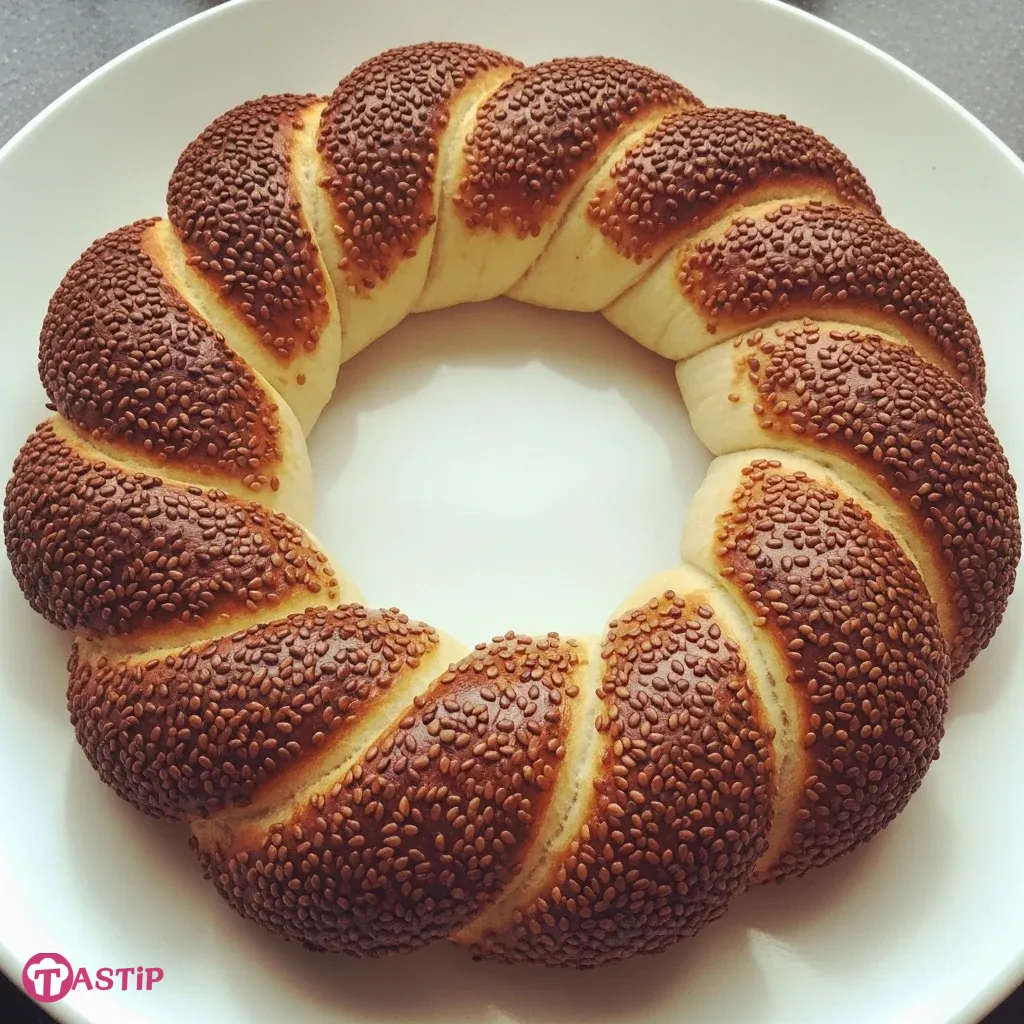
Experience the iconic taste of Istanbul with a perfectly baked Turkish Simit. This circular bread features a deep golden, sesame-crusted exterior and a soft, chewy interior. It offers a unique balance of savory and sweet notes thanks to its signature grape molasses bath.
As a former test kitchen chef, I find the science behind this ring-shaped bread fascinating. Mastering the Turkish Simit requires understanding the relationship between gluten development and surface tension. This recipe guides you through the process of creating an authentic street-food staple in your own kitchen. You will learn how to achieve that characteristic crunch and airy crumb through precise technique.
Why You’ll Love This Turkish Simit Recipe
- Addictive Texture: You get a satisfying crunch from the toasted sesame seeds followed by a soft, elastic crumb.
- Kitchen Science: This recipe utilizes the Maillard reaction through a molasses dip to create an incredible deep-brown crust without a long bake time.
- Wholesome Ingredients: This bread uses simple, pantry-stable items and contains no artificial preservatives or highly processed fats.
- Crowd Pleaser: Everyone loves the visual appeal of the braided ring, making it a perfect centerpiece for brunch.
Ingredients You’ll Need
To create a high-quality Turkish Simit, you must focus on the protein content of your flour. I recommend using bread flour over all-purpose flour because the higher protein levels (12-13%) ensure the dough can support the weight of the sesame seeds. The molasses, specifically grape molasses (pekmez), provides the essential sugars for caramelization and flavor depth.
| Ingredient Category | Component | Quantity |
|---|---|---|
| The Dough | High-Protein Bread Flour | 500 grams (approx. 4 cups) |
| The Dough | Warm Water (105°F) | 300 ml |
| The Dough | Instant Yeast | 7 grams (1 packet) |
| The Dough | Fine Sea Salt | 10 grams |
| The Dough | Granulated Sugar | 15 grams |
| The Dough | Extra Virgin Olive Oil | 30 ml |
| The Coating | Grape Molasses (Pekmez) | 120 ml (1/2 cup) |
| The Coating | Water | 60 ml (1/4 cup) |
| The Coating | Toasted Sesame Seeds | 250 grams (approx. 2 cups) |
Substitutions & Variations
Note: This video is for demonstration purposes and may use a slightly different method.

While the classic Turkish Simit relies on specific ingredients, you can make healthy adjustments to suit your dietary needs or pantry availability. Use these suggestions to maintain the structural integrity of the bread while experimenting with flavors.
- Whole Wheat Swap: Replace 150 grams of the bread flour with whole wheat flour. This adds fiber and a nutty profile, though the crumb will be slightly denser.
- Molasses Alternatives: If you cannot find grape molasses, use honey or date syrup. These options provide the necessary sugars for the crust, although the flavor profile will shift slightly.
- Seed Variations: While sesame seeds are traditional, you can mix in flax seeds or chia seeds for an extra boost of Omega-3 fatty acids.
- Sugar-Free Option: Omit the granulated sugar in the dough. The yeast will still ferment by consuming the starches in the flour, though the rise may take slightly longer.
While the classic Turkish Simit relies on specific ingredients, you can make healthy adjustments to suit your dietary needs or pantry availability. For more creative suggestions that maintain flavor while experimenting, check out these French Onion Meatballs.
Step-by-Step Instructions
- Activate the Yeast: Combine the warm water, sugar, and instant yeast in a small bowl. Let the mixture sit for about 5 to 10 minutes until a foamy layer forms on the surface. This bloom indicates that your yeast is alive and ready to produce carbon dioxide.
- Mix the Dry Ingredients: In a large mixing bowl or the bowl of a stand mixer, whisk together the bread flour and sea salt. Aerating the flour helps prevent clumps and ensures even salt distribution throughout the Turkish Simit dough.
- Develop the Gluten: Add the yeast mixture and olive oil to the dry ingredients. Use a dough hook on medium-low speed for about 8 to 10 minutes. You want the dough to become smooth and elastic. Perform the windowpane test by stretching a small piece of dough; if it becomes translucent without tearing, your gluten structure is strong.
- First Fermentation: Place the dough in a lightly oiled bowl and cover it with a damp cloth. Let it rise in a warm, draft-free spot for 60 to 90 minutes. The dough should double in size. During this time, the yeast ferments the sugars, creating the gases that make your Turkish Simit light and airy.
- Degas and Portion: Gently punch down the risen dough to release excess gas. Turn it onto a lightly floured surface and divide it into 10 equal portions (approx. 80-90 grams each). Shape each piece into a smooth ball.
- Shape the Rings: Roll each ball into a long rope, roughly 25 to 30 inches long. Fold the rope in half and twist the two strands together tightly. Join the ends to form a circle, pressing firmly to seal the seam. This twisted shape provides the Turkish Simit with its characteristic nooks and crannies.
- Prepare the Bath: Whisk the molasses and water together in a wide, shallow dish. Place the toasted sesame seeds in a separate wide dish. The molasses acts as a glue and provides the sugars for the Maillard reaction.
- The Double Dip: Submerge each dough ring into the molasses mixture, ensuring full coverage. Immediately lift it and drop it into the sesame seeds. Press gently so the seeds adhere to every surface of the Turkish Simit.
- Final Proof and Bake: Place the rings on parchment-lined baking sheets. Let them rest for another 20 minutes while you preheat your oven to 425°F (220°C). Bake for 15 to 20 minutes until the rings reach a deep, reddish-brown color.
Pro Tips for Success
Achieving the perfect Turkish Simit involves mastering the details. As a chef, I emphasize the importance of temperature and timing. Use a digital kitchen scale for the most accurate results, as volume measurements for flour can vary by up to 20 percent.
Furthermore, ensure your sesame seeds are toasted before coating the dough; this enhances the volatile oils and creates a much deeper flavor profile. If the dough resists stretching into a rope, let it rest for five minutes to allow the gluten to relax. This prevents the dough from snapping back and ensures a uniform shape.
Finally, don’t be afraid of the dark color. The molasses creates a very dark crust quickly, but this is flavor, not burnt dough.
Achieving the perfect Turkish Simit involves mastering the details. For a delicious treat that showcases amazing textures, you might also want to try making Halloween Whoopie Pies, which demand precision in execution.
Storage & Reheating Tips
The Turkish Simit is best enjoyed fresh, ideally within a few hours of leaving the oven. However, you can store leftovers in an airtight container at room temperature for up to two days. To revive the texture, avoid the microwave, as it will make the crust soggy.
Instead, use a toaster oven or a conventional oven set to 350°F for about five minutes. This heat re-crisps the exterior while softening the interior crumb. For long-term storage, you can freeze the baked rings for up to three months. Simply thaw them at room temperature and toast them before serving to regain that signature crunch.
What to Serve With This Recipe
In Turkey, people often enjoy the Turkish Simit as part of a elaborate breakfast spread. To keep things healthy and balanced, I recommend pairing it with fresh, vibrant ingredients. The savory-sweet crust complements acidic and creamy elements beautifully. Consider these nutritious pairings:
- Fresh Vegetable Platter: Serve with sliced cucumbers, heirloom tomatoes, and green bell peppers drizzled with a touch of lemon juice.
- Healthy Fats: Pair your bread with sliced avocado or a bowl of Kalamata olives for heart-healthy monounsaturated fats.
- Protein-Rich Dips: Enjoy the Turkish Simit with high-quality feta cheese, labneh, or even a hard-boiled egg.
- Roasted Greens: For a light lunch, serve alongside a warm salad of roasted asparagus or charred kale.
In Turkey, people often enjoy the Turkish Simit as part of an elaborate breakfast spread. To complement the flavors of your Simit, consider enjoying it alongside a warm bowl of Cheddar Garlic Herb Potato Soup, which adds a nutritious balance to your meal.
FAQs
Can I make the dough for Turkish Simit ahead of time?
Yes, you can certainly prepare the dough in advance. After the initial mixing, place the dough in a bowl, cover it tightly with plastic wrap, and refrigerate it overnight. A cold fermentation allows the yeast to work slowly, which actually develops more complex flavors in the Turkish Simit. When you are ready to bake, let the dough come to room temperature for about 30 minutes before shaping and dipping.
Why is my Turkish Simit tough instead of chewy?
Toughness usually stems from over-baking or using too much flour. When you measure flour by the cup, you might accidentally pack it down, leading to a dry dough. Furthermore, if you bake the bread at too low a temperature for too long, the moisture evaporates, leaving the Turkish Simit hard. Ensure your oven is fully preheated to 425°F to achieve a quick “oven spring” and a soft interior.
Do I have to use grape molasses?
While grape molasses (pekmez) provides the most authentic flavor for Turkish Simit, it is not strictly mandatory for the structure. The primary purpose of the dip is to provide moisture for the sesame seeds to stick and sugar for the crust to brown. You can substitute it with pomegranate molasses, maple syrup, or even a simple brown sugar syrup. However, the unique, slightly tangy depth of grape molasses is what truly defines the traditional taste.
Turkish Simit is a popular street food known for its crunchy sesame crust and chewy interior, often enjoyed during breakfast or as a snack. It is deeply rooted in Turkish culture and has numerous variations found across different regions; more about its historical significance can be found in this detailed overview.
Nutrition Information (per serving)
This recipe yields 10 servings. The following data represents the estimated nutritional profile for one Turkish Simit ring. Note that using different types of molasses or flour will alter these values slightly.
| Nutrient | Amount per Serving |
|---|---|
| Calories | 310 kcal |
| Total Fat | 12g |
| Saturated Fat | 1.5g |
| Sodium | 410mg |
| Total Carbohydrates | 45g |
| Dietary Fiber | 4g |
| Sugars | 8g |
| Protein | 9g |
By understanding the science of gluten and the chemistry of the molasses dip, you can create a world-class Turkish Simit in your home kitchen. This bread represents a beautiful intersection of technique and tradition. Whether you serve it for breakfast or as a snack, the satisfaction of that first crunchy bite is worth every minute of kneading. Enjoy the process of mastering this legendary bread and sharing the results with your friends and family.
Print
Turkish Simit
- Total Time: 80 mins
- Yield: 10 servings 1x
- Diet: Vegetarian
Description
Turkish Simit is a circular bread featuring a deep golden, sesame-crusted exterior and a soft, chewy interior, bathed in grape molasses that adds a unique balance of savory and sweet notes, making it an iconic street-food staple.
Ingredients
500 grams High-Protein Bread Flour
300 ml Warm Water
7 grams Instant Yeast
10 grams Fine Sea Salt
15 grams Granulated Sugar
30 ml Extra Virgin Olive Oil
120 ml Grape Molasses
60 ml Water
250 grams Toasted Sesame Seeds
Instructions
- Combine warm water, sugar, and instant yeast in a small bowl and let sit for 5 to 10 minutes until foamy
- Whisk bread flour and sea salt in a large bowl or stand mixer
- Add the yeast mixture and olive oil to the dry ingredients, mixing on medium-low speed for 8 to 10 minutes until elastic
- Place the dough in a lightly oiled bowl, cover, and let rise in a warm place for 60 to 90 minutes until doubled in size
- Degas the dough, divide it into 10 portions, and shape each into smooth balls
- Roll each ball into a rope, twist, and join the ends to form a ring
- Prepare a bath by whisking together grape molasses and water, and place sesame seeds in another dish
- Submerge each ring in the molasses mixture, then press into the sesame seeds
- Place on baking sheets and let rest for 20 minutes while preheating the oven to 425°F
- Bake for 15 to 20 minutes until deep brow
Notes
For a healthier variant, consider substituting part of the bread flour with whole wheat flour.
If grape molasses is unavailable, substitutes like honey or date syrup can be used.
- Prep Time: 60 mins
- Cook Time: 20 mins
- Category: Snack
- Method: Baking
- Cuisine: Turkish
Nutrition
- Serving Size: 1 ring
- Calories: 310 kcal
- Sugar: 8g
- Sodium: 410mg
- Fat: 12g
- Saturated Fat: 1.5g
- Unsaturated Fat: 10.5g
- Trans Fat: 0g
- Carbohydrates: 45g
- Fiber: 4g
- Protein: 9g
- Cholesterol: 0mg